Your Notifications
All done, no notifications

High Tibial Osteotomy: Symptoms, Classification, Diagnosis & Recovery

High Tibial Osteotomy(HTO) is a specialised surgical procedure used to relieve chronic knee pain and improve joint function, especially in people with osteoarthritis affecting only one side of the knee, typically the inner (medial) compartment. The goal is to realign the knee and shift weight-bearing away from the damaged area, helping to reduce discomfort and delay the need for total knee replacement.

During the surgery, the upper part of the tibia (shinbone) is carefully cut and repositioned. This may involve creating a small wedge-shaped opening (opening-wedge osteotomy) or removing a wedge of bone (closing-wedge osteotomy), depending on the alignment correction needed. The adjusted bone is then secured with metal plates and screws to maintain stability as it heals.

After the procedure, patients usually wear a brace and may use crutches to avoid putting weight on the leg initially. As healing progresses, a structured physiotherapy program begins to restore strength, flexibility, and range of motion in the knee. With consistent rehab and follow-up care, many patients experience pain relief and an improved ability to walk, exercise, and perform everyday activities.

Here are the signs and symptoms of High Tibial Osteotomy:

  • Pain
  • Stiffness
  • Swelling
  • Instability
  • Weakness
  • Tenderness
  • Limited movement
  • Swelling
  • Difficulty walking

Recovery after High Tibial Osteotomy (HTO) is a gradual process that typically spans several months and varies depending on the individual’s age, health, surgical technique, and adherence to rehabilitation protocols.

Most patients remain in the hospital for 1 to 2 days after surgery. In the initial phase, patients are advised to avoid putting weight on the operated leg and use crutches for support for about 6 weeks. Over time, weight-bearing is increased based on healing progress, with most patients achieving full weight-bearing by 10 to 12 weeks.

Physical therapy usually starts within a few days of surgery to help restore joint mobility. Strengthening and functional training are added gradually, continuing over several months. Most people can return to desk jobs within 6 to 12 weeks, while those with physically demanding occupations may need 3 to 6 months. Full recovery often takes between 6 and 12 months for athletic or high-impact activities.

Several factors influence the pace of recovery. Individuals with a higher body mass index (BMI), older age, or females may experience a slightly extended recovery period. Additionally, the type of osteotomy - whether opening wedge or closing wedge—can also affect healing time. Adhering to medical advice, attending follow-up visits, and staying consistent with physiotherapy are crucial for a successful outcome.

Best High Tibial Osteotomy Hospitals
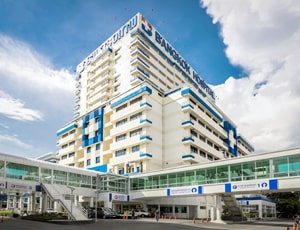
Bangkok Hospital

Bangkok Hospital

Bangkok, Thailand

One of the most renowned and honoured hospital networks in Asia- Pacific is Bangkok Dusit Medical Se...more

FACILITIES

Phone in Room

Foreign Currency Exchange

Rehabilitation

Free Wifi

Joint Commission International, or JCI
Mount Elizabeth Hospital

Mount Elizabeth Hospital

Singapore, Singapore

Mount Elizabeth Hospital is a multispecialty healthcare facility operated by Parkway Health. The hos...more

FACILITIES

phone in the room SIM

Free Wifi

Translator

Health Insurance Coordination

Joint Commission International, or JCI

Catholic kwandong university international St Mary hospital is one of its kind hospitals in Korea. I...more

FACILITIES

International Patient's Lounge

interpreter services Interpreter

Local Transportation Booking

family accomodation Accommodation Services

Joint Commission International, or JCI

Consult Online with World’s Best High Tibial Osteotomy

View All Doctors

Explore Top Hospitals Worldwide for High Tibial Osteotomy

Explore Top Hospitals for High Tibial Osteotomy

Author

Alvina Hasan

M.Pharm

1 Year of Experience

Alvina Hasan is a dedicated medical researcher and scientific writer with a strong foundation in the pharmaceutical sciences. She holds a B.Pharm from Jamia Hamdard University and an M.Pharm in Quality Assurance from DIPSAR University. With deep medical expertise and a strong interest in healthcare communication, she focuses on transforming complex clinical and scientific information into clear, engaging, and easy-to-understand narratives. She develops insightful healthcare articles and research-driven pieces designed to support both medical professionals and patients, helping bridge the gap between advanced medical knowledge and practical understanding. . View More

Reviewer

Dr. Manoj Miglani

Orthopedic Surgeon

22 Years of Experience

Known for his soft-spoken nature, Dr. Manon Miglani had completed his MBBS from Maulana Azad Medical College and MS (Ortho) for All India Institute of Medical Sciences. Dr. Miglani was awarded AO spine fellowship from Queen’s Medical Center, Nottingham and he also received Stryker fellowship in Arthroplasty from Indraprastha Apollo Hospital. Dr. Manon Miglani has provided his expert services to various hospitals of Delhi and NCR including AIIMS, Indraprastha Apollo, Jaipur Golden hospital, and Artemis hospital Presently, Dr. Manon is the additional director of Fortis, Vasant Kunj and senior consultant at Fortis, Shalimar Bagh. View More