Vesicoureteral Reflux (VUR) Treatment in Thailand
- Top Accredited Hospitals
- Global Medical Standards
- Cutting-Edge Technology
- Proven Treatment Options
- High Success Rate
- Trusted by Millions

What is Vesicoureteral Reflux (VUR)?
Vesicoureteral reflux is when some urine leaves the bladder in the wrong direction. It returns via ureteric tubes, which link the kidneys and bladder. Urine usually travels from the kidneys to the bladder via the ureters. It is not intended to flow upward again.
Children and babies are most frequently affected by vesicoureteral reflux. Because of a structural problem with one of the two ureters, some people are born with vesicoureteral reflux. Others get the illness later because of factors like incomplete bladder emptying.
What is the Importance of Timely Treatment?
- It is essential to treat Vesicoureteral Reflux (VUR) as soon as possible to avoid kidney damage, UTIs, and potential long-term issues like renal failure or kidney scarring.
- By treating reflux before it causes irreversible damage, early intervention helps to maintain kidney function and prevent recurrent infections.
- Additionally, timely therapy prevents the illness from worsening and necessitates more invasive procedures.
What are the Common Symptoms of Vesicoureteral Reflux (VUR)?
Urinary tract infections (UTIs) frequently cause symptoms of vesicoureteral reflux. These signs may consist of:
- An intense, ongoing need to urinate
- The sensation of burning when urinating
- The frequent need to pass little volumes of pee
- Cloudy urine
- Fever
- Discomfort in the stomach, groin, or side
Babies and some young children with UTIs cannot communicate their symptoms to adults. However, they might have:
- Fever without any apparent cause
- Lack of hunger
- Fussiness
If left untreated, vesicoureteral reflux in children can result in:
- Wetting the bed
- Loss of control over bowel movements or constipation
- Elevated blood pressure
- Urine that contains protein
- Urinating urgently or more frequently than usual is necessary
- Urinary incontinence is the term for accidentally leaking pee
- Hydronephrosis
Types of vesicoureteral reflux
The two types of VUR are primary and secondary:
- Primary VUR: Most VUR cases are primary, typically affecting only one kidney and one ureter (unilateral reflux).
- Secondary VUR: Secondary VUR happens when a blockage in the urinary tract raises the pressure and forces urine back into your child's kidneys, ureters, or bladder from the urethra.
Stages of Vesicoureteral Reflux (VUR)
- Grade 1: The ureter is a standard width, but the urine travels backwards.
- Grade 2: Pee backs up into the renal pelvis, where the kidney and ureter connect, and a ureter. The ureter and renal pelvis have not widened.
- Grade 3: Due to pee backing up, the ureter(s), renal pelvis, and calyces where urine collecting starts in the bladder are mild to moderately enlarged.
- Grade 4: Due to excessive pee backing up, the kidney pelvis and calyces are substantially enlarged, and the ureter or ureters are curved.
- Grade 5: There is significant enlargement and distortion of the ureter or ureters. Due to an excessive volume of urine backing up, the renal pelvis and calyces are substantial.
Causes, Risk Factors and Complications of Vesicoureteral Reflux (VUR)
Causes
Primary vesicoureteral reflux: Vesicoureteral reflux comes in two primary forms, each with its causes.
Children often develop vesicoureteral reflux due to a valve issue, allowing urine to flow back up ureters. The valves may improve as they grow, and this condition may be genetically inherited.
Secondary vesicoureteral reflux: This kind of reflux is typically caused by improper bladder emptying. This can happen for a variety of reasons.
Risk Factors
Vesicoureteral reflux risk factors include:
- Bladder and bowel dysfunction (BBD): Children with BBD retain faeces and urine.
- Assigned sex at birth: Generally speaking, girls are far more likely than boys to have this illness. Vesicoureteral reflux that is present from birth is an exception. Boys are more likely to experience this.
- Age: Vesicoureteral reflux is more common in infants and young children up to age two than in older kids.
- Family history: In most cases, primary vesicoureteral reflux runs in families. The disorder is more likely to affect children whose parents had it.
Complications
Vesicoureteral reflux disease (VUR) in children can lead to the following complications:
- Bladder and kidney infections are examples of urinary tract infections (UTIs).
- Bladder issues, such as bedwetting, urine retention, and incontinence.
- Elevated blood pressure
- Kidney damage (Nephrotic syndrome), kidney scarring, and chronic kidney failure (Rarely).
Connect with our advisor for a PRIORITY response
Latest Research and Technologies in the Treatment of Vesicoureteral Reflux (VUR) in Thailand
- In Thailand, modern research and technology for treating vesicoureteral reflux (VUR) concentrate on minimally invasive methods, like injecting bulking agents endoscopically to stop reflux without surgery.
- Magnetic resonance voiding cystourethrography (MR-VCUG) is one of the advanced imaging procedures that offers less invasive and more accurate diagnosis.
- Furthermore, genetic research seeks to identify the root causes of VUR to provide more individualised treatment plans.
Vesicoureteral Reflux (VUR) Prevention Tips
Diet, lifestyle modifications, or medication cannot prevent vesicoureteral reflux (VUR). However, you may take actions to enhance the general health of your child's urinary system.
Ensure that your child
- Consumes adequate water.
- Changing their diaper should be done right away after urination and faeces.
- Pees regularly and avoids “holding it.”
- As quickly as possible, constipation and faecal or urine incontinence are treated.
Treatment options for Vesicoureteral Reflux (VUR)
Ureteral Reimplantation: Repositioning the ureter surgically to stop urine from flowing backwards into the kidneys is known as ureteric reimplantation.
Endoscopic Injection: To stop reflux, a bulking agent is injected into the ureter during a minimally invasive procedure.
Cost Start From USD 1200 - USD 2500Explore Options
These are the following tests to diagnose vesicoureteral reflux (VUR):
- Blood tests: Elevated creatinine or protein levels indicate renal impairment.
- Urine testing and culture: Bacteria in urine indicate an illness, while protein in urine indicates kidney impairment.
- Blood pressure checks: Children with kidney issues are more likely to have high blood pressure.
- VCUG is an X-ray procedure: That can be carried out in various situations without anaesthesia. It involves using a catheter to fill the bladder with a dye to detect urine flowing backwards into the ureters.
- Ultrasound: Using sound waves, this painless and safe imaging method produces pictures of your child's whole urinary tract, including their kidneys and bladder.
- Dimercaptosuccinic acid (DMSA) scan: This can determine whether your child's kidneys have scars from kidney UTIs.
- Radionuclide Cystogram (RNC): A small amount of radioactive material is used in this diagnostic imaging process to assess the bladder and urinary tract and identify Vesicoureteral Reflux (VUR) and other urinary abnormalities.
- Preventing UTIs and controlling symptoms are the main goals of rehabilitation programs for vesicoureteral reflux (VUR).
- Surgical Recovery: Post-operative rehabilitation following surgery (such as ureteral reimplantation) may involve recovery-promoting activities, such as routine follow-ups and kidney function monitoring.
- Bladder muscle medications: Are prescribed to help control the function of the bladder muscles and lessen VUR symptoms.
- Antibiotics: Urinary tract infections (UTIs) can be prevented or treated with antibiotics, lowering the risk of kidney damage from repeated infections.
Instantly Connect with our Specialists


Hospitals for Vesicoureteral Reflux (VUR) in Thailand
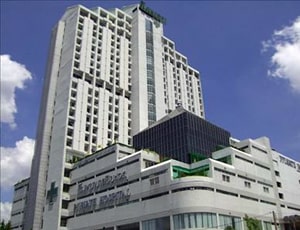
Piyavate Hospital
Bangkok, Thailand
Piyavate Hospital located in Bangkok, Thailand is accredited by JCI. Also listed below are some of the most prominent infrastructural details:
Medicine Centre: Piyavate Hospital provides advanced holistic treatment for their patients. They offer a complete range of services and physicians that specialize in various fields like the endocrine system, the nervous system, kidney function, cardiovascular care, respiratory and digestive system. They pride themselves for the familial care that they provide to their patients.
Fertility and In-Vitro Fertilization Centre: Helping the couples who walk into the Piyavate Hospital to achieve their dream of having a family. They have a medical team that specializes in male and female fertility. They offer consultation services, fertility check-up for both men and women and complete IVF services. They have advanced IVF cycle treatment facilities that offer a high rate of success.
Bone and Joint Institute: Piyavate Hospital houses one of the frontrunners in Orthopaedic health care in all of SouthEast Asia. They offer a wide range of services and surgeries in their bone and joint institute that include hand surgery, hip and knee replacement surgery, spinal cord surgery, upper extremity surgery, arthroscopic surgery and sports medicine.
Eye and Lasik Centre: Piyavate Hospital is fully equipped with the latest and most advanced technology for eye care and houses highly skilled ophthalmologists, sub-specialists and qualified nurses.
Physical Therapy and Rehabilitation Centre: One of the first hospitals to be equipped with the Hybrid Assistive Limb technology that will help a neurologically challenged patient to control the rehabilitation robot limb with a signal from their brain. The Physical Therapy and Rehabilitation Centre at Piyavate Hospital uses this system encourage patients to regain muscle memory to walk and function normally.
Amenities for Patient’s Family:
Piyavate Hospital also offers additional apartment facilities to house the kin of the patients who come to visit them from distant places. A restaurant, a flower shop and a café are a few of the other amenities provided by the hospital.
These are the most popular services offered by the Piyavate Hospital in Bangkok, Thailand. They also provide a plethora of other medical services that are listed below:
Diabetic Foot Centre
Check-up centre
Urology Centre
Heart Institute
Paediatric Centre
Obstetrics and Gynaecology Centre
Surgery Centre
Ear Nose Throat Centre
Haemodialysis Centre
Dental Centre
X-Ray Centre
Gastroenterology Centre
Cancer Centre
Neonatal Intensive Care Unit (NICU)
Emergency Services and Centre
Tele-medicine

Sukumvit Hospital, Bangkok
Bangkok, Thailand
- Sukumvit Hospital has provided a comprehensive range of healthcare services since 1977. It is committed to providing patient-centred care by combining advanced medical technologies and employing highly skilled, multi-specialised physicians to ensure that each patient receives high-quality treatment across all the various areas of medicine offered at the facility. They offer modern diagnostics, minimally invasive surgical procedures, rehabilitation, emergency services, and a full array of international patient services, while maintaining stringent standards for patient safety and personalised healthcare.

Sikarin Hospital
Bangkok, Thailand
Apart from in-detail treatment procedures available, Sikarin Hospital located in Bangkok, Thailand has a wide variety of facilities available for International Patients. Some of the facilities which are provided by them are Airport Transfer, Choice of Meals, Interpreter, SIM, TV inside room. Also listed below are some of the most prominent infrastructural details:
- Sikarin Hospital has a 258-bed capacity.
- The hospital caters to the healthcare needs of both local and international patients.
- Dedicated and skilled, experienced healthcare professionals are the strength of the organization.
It has also received many awards and certifications and some of them are:
- APSIC CSSD Center of Excellence Award (2017-18)
- Accreditation by the Joint Commission International
- HA-Hospital/Healthcare Accreditation
- HACCP Certificate of Registration
- The Best Under a Billion Award
- ISO 14001 Environment Management System
- ISO 9001 Quality Management System
The various clinics and centers of Sikarin Hospital are as follows:
- Pediatric Institute
- Orthopedic Institute
- Dental Center
- Health Check-up Center
- Heart Disease Center
- Cerebral and Nervous System Center
- Internal Medicine Clinic
- Diagnostic Radiology Center
- Diagnostic Laboratory
- Endoscopic Surgery Center
- International Medical Center
- Emergency Medical Center
- Sikarin Beauty Center
- Eye Center
- Rehabilitation Center
- Women’s Health Center
- Ear, Nose and Throat Center
- Specialized Internal Medicine Center
- Center for Gastrointestinal and Liver Diseases
The medical technology present in Sikarin Hospital is outlined here:
- MRI (Magnetic Resonance Imaging) magnetic resonance imaging
- Hybrid Operating Room
- Endoscopic Surgery - Gastrointestinal medical technology with tiny capsules
- S.R. Laboratory
- Cardiac Catheterization Lab
- Dental Operating Microscope, an innovative endoscopic root canal treatment
- 128-Slice CT Scan
- ORTHOPANTOMOGRAPH OP 3D oral X-ray machine
- Digital Mammogram
- Optical Coherence Tomography
- INFRARED (IR) IMAGING Surgical Technology “Cure Cancer” – Direct, Accurate, Fast
- 3D endoscopic surgery technology
- Laparoscopic Surgery
- Dental Aerosol Suction Dental Intraoral Aerosol Remover
- Comprehensive Dental Center
- iTeroElement 5D
Our Services to better your experience
Opinion & Option
We submit the most accurate opinion and options from one or more countries for your review
Consult Privately
Consult with a certified specialist privately on our telemedicine platform even before you decide to travel
Logistics
We handle flights, visas, transfers, and accommodation—so you can focus on your health.
Recovery
Our In-house rehabilitation service packages to better your recovery and treatment outcome
Why Choose Thailand for Vesicoureteral Reflux (VUR)?
Here are some of the reasons for selecting Thailand for Vesicoureteral Reflux (VUR) treatment.
- Urology Expertise: Thailand offers highly trained urologists that have considerable expertise treating VUR, especially pediatric patients.
- Advanced Treatment Options: Surgery, injections, and minimally invasive procedures utilizing cutting-edge technology are offered.
- Cost-Effective Care: VUR therapy in Thailand is less expensive than in many Western nations while maintaining high quality.
- International Patient Services: Thai hospitals offer seamless treatment to international patients, including multilingual support and personalized services.
- Accredited Healthcare Facilities: JCI accreditation ensures that leading Thai hospitals provide high-quality medical care.
Frequently Asked Questions
Indeed. Your child may grow out of VUR, particularly if their primary VUR grade is lower than one or two. Within a few years, children may outgrow this variety.VUR is very curable, and most kids don't experience any long-term consequences.
In moderate situations, particularly in lower grades of reflux, VUR may go away on its own as the kid gets older. Regular monitoring is necessary to keep track of any changes.
The success rate of Vesicoureteral Reflux (VUR) treatment in Thailand varies according to the approach employed. Surgical procedures such as extravesical ureteral reimplantation have success rates of over 90%, whereas endoscopic treatments have success rates ranging from 70% to 93%. Overall, therapy success rates for VUR range from 92% to 98%, depending on the severity and specific patient characteristics.
Since a UTI is frequently the initial indication of VUR, consult your child's paediatrician if you suspect one. Other symptoms may also indicate VUR, such as painful urination, incontinence, or an inexplicable fever. If your paediatrician suspects VUR, they might refer you to a specialist.
When VUR is severe or untreated, it can result in renal scarring, which can impede kidney function or induce kidney failure.
Observe your doctor's advice on treatment and monitoring:
- Keep an eye out for any UTI indications and report them immediately.
- Make sure your child consumes a lot of liquids.
Yes, VUR therapy in Thailand is more affordable than in many Western nations while still providing high-quality care.

Reviewer

Dr. Ashish George
Gastroenterologist
18 Years of Experience
Dr. Ashish George is one of the leading names in HPB surgery & liver transplantation and has about 18+ years of experience.He is a principal consultant & unit head of liver transplant at Fortis Shalimar Bagh. View More
Last Reviewed - January 2026