Spina Bifida Treatment in Thailand
- Top Accredited Hospitals
- Global Medical Standards
- Cutting-Edge Technology
- Proven Treatment Options
- High Success Rate
- Trusted by Millions

What is Spina Bifida?
A condition known as spina bifida is caused by a failure to form the spinal cord and spine correctly. This is a form of neural tube defect. In the embryo, the neural tube is the structure that will eventually become the baby's brain, spinal cord, and other surrounding tissues.
The neural tube usually closes by the 28th day after conception, having formed early in pregnancy. However, in spina bifida, some of the neural tube fails to close completely, affecting the spinal cord and the spine's bones.
What is the Importance of Timely Treatment?
Early treatment of spina bifida can reduce impairment, prevent infection and hydrocephalus, and improve cognitive and emotional development. Early therapies for controlling symptoms and improving quality of life include surgical interventions, physical therapy, and support. Early intervention can improve overall results and enable people with spina bifida to live active, fulfilling lives.
What are the Common Symptoms of Spina Bifida?
The common symptoms of spina bifida depend on the location and severity of the defect. In general, they include:
- Physical Disabilities: Paralysis of the legs partially or wholly depends on the severity and location of the defect.
- Hydrocephalus: Fluid accumulation in the brain brings about an elongated head and increased pressure inside the cranium.
- Bowel and Bladder Problems include loss of control of bowel and bladder functions, such as incontinence, constipation, or urinary retention.
- Deformities: Abnormal curvature or deformity in the spine in the back.
- Learning/Cognitive Challenges: Mild and moderate learning disorders, according to the level of the malformation.
Causes and Risk Factors of Spina Bifida
Causes
Spina bifida has no established aetiology. It is thought to be caused by a combination of environmental, dietary, and genetic risk factors, including a family history of neural tube abnormalities and inadequate folate (vitamin B9) during pregnancy.
Risk Factors
- Genetic Factors: A family history of spina bifida or other neural tube defects may increase the risk, and some genetic changes may also be implicated.
- Folic Acid Deficiency: The most significant risk factor is having a diet that lacks adequate amounts of folic acid (vitamin B9) both before and during the first trimester of pregnancy. Folic acid can prevent spina bifida and other neural tube defects.
- Health of the Mother:
- Obesity: The risk is higher if the individual is obese or overweight before conception.
- Diabetes: The possibility of spina bifida may be higher if the mother's diabetes is not well-controlled during pregnancy.
- Environmental Factors: Exposure to excessive heat (e.g., hot tubs or saunas) may increase the risk during early pregnancy.
- History of Previous Pregnancy with Spina Bifida: If a mother has had a previous child with spina bifida, the risk is higher for future pregnancies.
Connect with our advisor for a PRIORITY response
Latest Research and Technologies in the Treatment of Spina Bifida in Thailand
Thailand has established state-of-the-art treatments for spina bifida, such as robotic-assisted surgery for precise treatment, minimally invasive surgeries, and fetal surgery. Early diagnosis with improved imaging ensures timely interventions, but studies in neuroprosthetics and stem cell therapy provide encouraging mobility options. Quality of life of patients is also improved with individually tailored orthopaedic devices.
Spinal Bifida Prevention Tips
To reduce their risk of spina bifida, women should take folic acid daily during the early period of pregnancy and even before conception. Other helpful measures include avoiding certain medications, managing diabetes and obesity, and eating a healthy diet rich in folate. Preventing alcohol, tobacco, and excessive heat exposure should also help maintain a healthy lifestyle. Routine antenatal visits assure early diagnosis and thus allow early interventions. If these interventions are taken, the possibility of having a baby with spina bifida significantly decreases.
Treatment options for Spina Bifida
Surgery for Spina Bifida: Surgery for spina bifida is possible before delivery, as prenatal surgery, and after delivery.
Cost Start From USD 5000 - USD 12000Explore Options
VP Shunt: Hydrocephalus (occurs together with spina bifida) treatment can be an implanted shunt that removes excessive fluid from the brain.
Cost Start From USD 10000 - USD 14000Explore Options
- Clinical assessment:
- Blood Test: Most cases of spina bifida are diagnosed by ultrasound examination during pregnancy, although blood tests may occasionally be used for screening purposes.
- MSAFP test (Maternal serum alpha-fetoprotein): This measures the level of alpha-fetoprotein (AFP), a protein produced by the baby, obtained from a blood sample. Even though slight amounts of AFP regularly move from the baby into the pregnant parent's bloodstream, high levels may be indicative of a neural tube defect known as spina bifida. Usually, various factors can lead to increased levels of AFP, and it's not necessarily linked to spina bifida.
- AFP levels: Other reasons why the AFP level may not be the same in all cases are that there could be more than one baby, or the AFP level may have been estimated inaccurately. A repeat blood test might be necessary to confirm the result. If your AFP levels are still high, you need further tests, like an ultrasound scan.
- Imaging Tests:
- Ultrasound: Ultrasound is often used to visualise the spinal defect and monitor any fluid accumulation (hydrocephalus) or anomalies in the spinal cord to diagnose fetal spina bifida. It also helps determine the severity of the defect before delivery.
- Other diagnostic:
- Amniocentesis: If the prenatal ultrasound confirms the diagnosis of spina bifida, the doctor might ask for the amniocentesis test. This involves taking a sample of fluid surrounding the baby from the amniotic sac using a needle. This examination may be crucial for a doctor to rule out hereditary illnesses.
Our MediRehab facilities, part of MediGence in India, offer physical therapy services for international patients. We also have convenient teleconsultation options so that patients all over the globe can receive expert treatment remotely. A few services such as:
- Physical Therapy: The main goals of physical therapy in spina bifida are strengthening muscles, increasing mobility, and improving posture, balance, and coordination. Physical therapy will help people achieve excellent function and independence by giving them specific exercises designed to improve movement and strategies for treating joint abnormalities or contractures.
- Depending on the situation, your healthcare professional may prescribe medicine to help control your symptoms and support the treatment plan.
Instantly Connect with our Specialists


Hospitals for Spina Bifida in Thailand

Phyathai 2 International Hospital
Bangkok, Thailand
Phyathai 2 International Hospital located in Bangkok, Thailand is accredited by JCI. Also listed below are some of the most prominent infrastructural details:
- Fully equipped rooms are available for convenience of the patients- Gold B Room, Gold A Room, Pediatric Gold A, Platinum room, and Prestige ward
- Nearby accommodations are also available- Abloom Service Apartments, Bangkok Patio, VIB Best Western Sanam Pao, VIC3 Hotel
- Operating room
- International Patient Medical Center to assist overseas patients
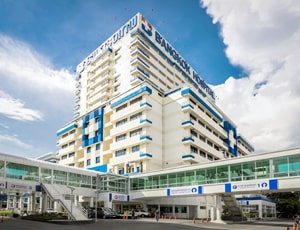
Bangkok Hospital
Bangkok, Thailand
Bangkok Hospital located in Bangkok, Thailand is accredited by JCI. Also listed below are some of the most prominent infrastructural details:
- It is recognised for the application of the newest healthcare technology.
- Blood analysis center that is not just the best in Thailand but in Asia Pacific as well.
- Biomolecule center that is the seed of healthcare equipment for Thailand and overseas.
- International affiliations and collaborations with universities and hospitals in Japan and the United States of America.
- 11 hospitals are recognised as Centers of Excellence.
- Known excellence in Trauma, Orthopedics, Cardiovascular, Neurology as well as Cancer Care.
- There is a proper streamlined patient services process followed in Bangkok Dusit Medical Services, Bangkok, Thailand.
- A well developed research center showcases the intent of the organisation to provide research based treatment opportunities to the patients.
- The group has several Medical industry partnerships as well to ensure healthcare solutions.

Vejthani Hospital
Bangkok, Thailand
Vejthani Hospital located in Bangkok, Thailand is accredited by NABH, NABL. Also listed below are some of the most prominent infrastructural details:
- It is among the topmost private hospitals functioning in Thailand.
- The bed capacity of the hospital is 263.
- There are more than three hundred thousand patients visiting the hospital every year.
- Vejthani hospital has more than 40 outpatient clinics and centers.
- International patient care center with all kinds of services: air ambulance, transfers, travel, stay, embassy liaison, patient coordinators, prayer rooms, visa coordination and translators for 20 languages.
- The special facilities are:
- International Certified Laboratory
- 10 Operating Rooms
- Radiology Section: Portable X-ray, CT-scan and C-ARM and MRI
- Neonatal Critical Care Unit
- Water-jet technique applied for liposuction
- Computer navigation and mini-invasive technique for Joint Replacement surgery
Our Services to better your experience
Opinion & Option
We submit the most accurate opinion and options from one or more countries for your review
Consult Privately
Consult with a certified specialist privately on our telemedicine platform even before you decide to travel
Logistics
We handle flights, visas, transfers, and accommodation—so you can focus on your health.
Recovery
Our In-house rehabilitation service packages to better your recovery and treatment outcome
Why Choose Thailand for Spina Bifida Treatment?
Thailand offers cutting-edge spina bifida treatment with novel techniques such as stem cell therapy, robotic surgeries, and fetal surgery. The country is an excellent choice for effective and compassionate therapy due to its well-trained physicians, advanced medical facilities, and focus on early detection and personalised treatment.
Frequently Asked Questions
PSpina bifida might impact a child's development in several ways, including physical impairments, weakness or paralysis of the muscles, especially the legs, and problems with mobility. It could also cause neurological disorders, including loss of sensation and cognitive impairment. Bowel and bladder control issues are common, but hydrocephalus can affect brain development.
In Thailand, the quality and seriousness of the medical treatment decide how long one with spina bifida lives. Most individuals live up to adulthood and live a fulfilling life due to early intervention and improvement in treatments.
Yes, with the proper support and care, many people with spina bifida can lead everyday lives. However, due to the degree of their conditions, they may face neurological and physical challenges. As long as they receive proper medical care, rehabilitation, assistive technology, and support, people with spina bifida can be self-sufficient, attend school, and have social lives.
Spina bifida currently has no known treatment. Numerous medical techniques, such as surgery to fix the spinal deformity, physical therapy for improving movement, and other treatments that address connected issues, like hydrocephalus, can be used to manage the disease.
The aims of spina bifida treatment are the management of symptoms, prevention of complications, and improvement in quality of life. These include:
- Surgery: The operation is carried out within days after birth to close the spinal deformity and prevent further damage. Fetal surgery is sometimes carried out to correct the problem before delivery
- Physiotherapy: It prevents contractures and enhances muscle strength and movement
- Assistive Devices: Assistive mobility helps with bracing, splinting, and wheelchairs
- Hydrocephalus Treatment: Hydrocephalus treatment can be an implanted shunt that removes excessive fluid from the brain.
- Bladder and Bowel Management: Catheters, drugs, and surgery are administered to manage incontinence issues.
Yes, diagnostic testing and prenatal screening can identify spina bifida before delivery. The most common tests used are MSAFP testing, ultrasound, and amniocentesis.
Depending on the severity, spina bifida can have various long-term effects, but most commonly includes neurological impairments like sensory loss or learning challenges, as well as movement problems such as paralysis or weakness in the legs. Most have joint abnormalities, hydrocephalus requiring a shunt, and bladder and bowel dysfunction.
Yes, spina bifida can lead to learning problems in many affected children, particularly in the more severe types of the condition. Mild to moderate cognitive impairments may affect memory, attention, problem-solving, and processing speed.
Hydrocephalus occurs when the brain's cerebrospinal fluid accumulates so much that it raises the pressure inside the skull. It often occurs together with spina bifida, mainly when myelomeningocele, the most severe type, is present. Spina bifida's anomalies in the brain's fluid drainage system can cause the accumulation of CSF.
Hydrocephalus is a condition in which extra fluid in the brain causes damage if not treated. It is usually treated with a shunt, a tube placed into the brain to remove the extra fluid. It is essential to monitor individuals with spina bifida, as it can lead to physical signs such as head enlargement, learning disabilities, and developmental delays.
Yes, spina bifida is treated by fetal surgery in Thailand. In an attempt to close the spinal deformity and prevent further neurological damage, the procedure is performed before the birth.

Reviewer

Dr Sonal Gupta
Neurosurgeon
29 Years of Experience
Dr. Sonal Gupta has an experienced neurosurgeon with more than 29+ years of clinical expertise. She is currently the Director, Neuro & Spine Surgery at Fortis Hospital, Shalimar Bagh. Before joining Fortis, she has been associated with various organizations such as Maharaja Agrasen Hospital, Action Balaji Hospital, and Max Hospital. View More
Last Reviewed - January 2026