Presbyopia Treatment in Thailand
- Top Accredited Hospitals
- Global Medical Standards
- Cutting-Edge Technology
- Proven Treatment Options
- High Success Rate
- Trusted by Millions

What is Presbyopia?
Presbyopia is a common, age-related vision condition in which the eye gradually loses its ability to focus clearly on nearby objects. It happens because the eye's natural lens becomes less flexible with age and cannot change shape as easily to focus on close objects. Presbyopia typically becomes noticeable after age 40 and gradually worsens over time.
Presbyopia differs from hyperopia (farsightedness), although both can make it hard to see nearby objects. Presbyopia is primarily related to ageing, whereas hyperopia relates to the eye's optical structure.
What is the Importance of Timely Treatment?
Timely assessment and correction can improve near vision, reduce eye strain and headaches, and make everyday activities such as reading, writing, using a phone, and working on a computer more comfortable. An eye exam can also identify other conditions that may cause blurred vision.
Although presbyopia is a natural part of ageing and cannot currently be prevented or permanently reversed, several options can help manage its effects. The best approach depends on your visual needs, overall eye health, age, and personal preferences.
What are the common symptoms of presbyopia?
- Blurry near vision
- Eye strain and fatigue
- Headache
- Difficulty in reading small print
- Difficulty in focusing
- Need for bright light while reading
Causes and Risk Factors of Presbyopia
Causes
- Natural ageing: The eye’s natural lens gradually loses flexibility with age, making it harder to focus on nearby objects.
- Reduced focusing ability: The muscles that change the lens’s shape become less effective over time.
Risk Factors
- Increasing age
- Eye trauma or previous eye injury
- Certain medical conditions like diabetes, multiple sclerosis, and cardiovascular disease increase risk.
- Certain drugs, such as antihistamines, antidepressants, and diuretics, can cause near-vision difficulties
Latest Research and Technologies in the Treatment of Presbyopia in Thailand
- Newer presbyopia treatments include trifocal and extended-depth-of-focus intraocular lenses, advanced lens-exchange procedures, and prescription eye drops being studied to temporarily improve near vision. Researchers are also exploring drug combinations and treatments that may improve the eye’s ability to focus while reducing side effects such as glare and halos.
Treatment options for Presbyopia
Laser Refractive Procedures : A laser reshapes the cornea so that one eye is optimised for distance vision and the other for near vision. This reduces dependence on reading glasses. A contact-lens trial is often used beforehand to check whether the patient can adapt to monovision.
Cost Start From 1800Explore Options
Refractive Lens Exchange (RLE): The eye’s natural lens is surgically removed and replaced with an artificial intraocular lens (IOL). A multifocal, trifocal, or EDOF IOL can provide distance and near vision and reduce reliance on glasses.
- Clinical assessment:
- Visual acuity test: Checks distance and near vision using eye charts.
- Refraction test: It is used to check the power of the glasses or contact lenses
- Slit-lamp examination: Used to examine the cornea, lens, and other front structures of the eye.
- Pupil assessment: Checks pupil size and response, which may help assess suitability for certain treatments.
- Imaging Tests:
- Corneal topography/tomography: This test checks the shape and curvature of the cornea, particularly before refractive surgery.
- Anterior-segment OCT: This test provides detailed images of the cornea, anterior chamber, and lens when additional structural assessment is needed.
- Ocular biometry: This measures eye dimensions before planning lens-based surgery such as refractive lens exchange.
- Medicines do not directly treat presbyopia; however, supportive therapy can help, such as miotic eye drops, which temporarily constrict the pupil to improve near vision. Medications may manage symptoms but do not reverse age-related changes in the eye and should be taken only on a doctor's recommendation.
Instantly Connect with our Specialists


Hospitals for Presbyopia in Thailand
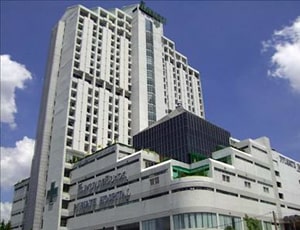
Piyavate Hospital
Bangkok, Thailand
Piyavate Hospital located in Bangkok, Thailand is accredited by JCI. Also listed below are some of the most prominent infrastructural details:
Medicine Centre: Piyavate Hospital provides advanced holistic treatment for their patients. They offer a complete range of services and physicians that specialize in various fields like the endocrine system, the nervous system, kidney function, cardiovascular care, respiratory and digestive system. They pride themselves for the familial care that they provide to their patients.
Fertility and In-Vitro Fertilization Centre: Helping the couples who walk into the Piyavate Hospital to achieve their dream of having a family. They have a medical team that specializes in male and female fertility. They offer consultation services, fertility check-up for both men and women and complete IVF services. They have advanced IVF cycle treatment facilities that offer a high rate of success.
Bone and Joint Institute: Piyavate Hospital houses one of the frontrunners in Orthopaedic health care in all of SouthEast Asia. They offer a wide range of services and surgeries in their bone and joint institute that include hand surgery, hip and knee replacement surgery, spinal cord surgery, upper extremity surgery, arthroscopic surgery and sports medicine.
Eye and Lasik Centre: Piyavate Hospital is fully equipped with the latest and most advanced technology for eye care and houses highly skilled ophthalmologists, sub-specialists and qualified nurses.
Physical Therapy and Rehabilitation Centre: One of the first hospitals to be equipped with the Hybrid Assistive Limb technology that will help a neurologically challenged patient to control the rehabilitation robot limb with a signal from their brain. The Physical Therapy and Rehabilitation Centre at Piyavate Hospital uses this system encourage patients to regain muscle memory to walk and function normally.
Amenities for Patient’s Family:
Piyavate Hospital also offers additional apartment facilities to house the kin of the patients who come to visit them from distant places. A restaurant, a flower shop and a café are a few of the other amenities provided by the hospital.
These are the most popular services offered by the Piyavate Hospital in Bangkok, Thailand. They also provide a plethora of other medical services that are listed below:
Diabetic Foot Centre
Check-up centre
Urology Centre
Heart Institute
Paediatric Centre
Obstetrics and Gynaecology Centre
Surgery Centre
Ear Nose Throat Centre
Haemodialysis Centre
Dental Centre
X-Ray Centre
Gastroenterology Centre
Cancer Centre
Neonatal Intensive Care Unit (NICU)
Emergency Services and Centre
Tele-medicine
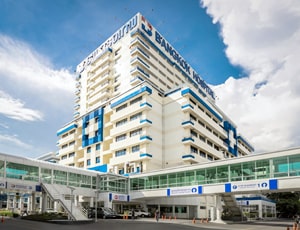
Bangkok Hospital
Bangkok, Thailand
Bangkok Hospital located in Bangkok, Thailand is accredited by JCI. Also listed below are some of the most prominent infrastructural details:
- It is recognised for the application of the newest healthcare technology.
- Blood analysis center that is not just the best in Thailand but in Asia Pacific as well.
- Biomolecule center that is the seed of healthcare equipment for Thailand and overseas.
- International affiliations and collaborations with universities and hospitals in Japan and the United States of America.
- 11 hospitals are recognised as Centers of Excellence.
- Known excellence in Trauma, Orthopedics, Cardiovascular, Neurology as well as Cancer Care.
- There is a proper streamlined patient services process followed in Bangkok Dusit Medical Services, Bangkok, Thailand.
- A well developed research center showcases the intent of the organisation to provide research based treatment opportunities to the patients.
- The group has several Medical industry partnerships as well to ensure healthcare solutions.

Sikarin Hospital
Bangkok, Thailand
Apart from in-detail treatment procedures available, Sikarin Hospital located in Bangkok, Thailand has a wide variety of facilities available for International Patients. Some of the facilities which are provided by them are Airport Transfer, Choice of Meals, Interpreter, SIM, TV inside room. Also listed below are some of the most prominent infrastructural details:
- Sikarin Hospital has a 258-bed capacity.
- The hospital caters to the healthcare needs of both local and international patients.
- Dedicated and skilled, experienced healthcare professionals are the strength of the organization.
It has also received many awards and certifications and some of them are:
- APSIC CSSD Center of Excellence Award (2017-18)
- Accreditation by the Joint Commission International
- HA-Hospital/Healthcare Accreditation
- HACCP Certificate of Registration
- The Best Under a Billion Award
- ISO 14001 Environment Management System
- ISO 9001 Quality Management System
The various clinics and centers of Sikarin Hospital are as follows:
- Pediatric Institute
- Orthopedic Institute
- Dental Center
- Health Check-up Center
- Heart Disease Center
- Cerebral and Nervous System Center
- Internal Medicine Clinic
- Diagnostic Radiology Center
- Diagnostic Laboratory
- Endoscopic Surgery Center
- International Medical Center
- Emergency Medical Center
- Sikarin Beauty Center
- Eye Center
- Rehabilitation Center
- Women’s Health Center
- Ear, Nose and Throat Center
- Specialized Internal Medicine Center
- Center for Gastrointestinal and Liver Diseases
The medical technology present in Sikarin Hospital is outlined here:
- MRI (Magnetic Resonance Imaging) magnetic resonance imaging
- Hybrid Operating Room
- Endoscopic Surgery - Gastrointestinal medical technology with tiny capsules
- S.R. Laboratory
- Cardiac Catheterization Lab
- Dental Operating Microscope, an innovative endoscopic root canal treatment
- 128-Slice CT Scan
- ORTHOPANTOMOGRAPH OP 3D oral X-ray machine
- Digital Mammogram
- Optical Coherence Tomography
- INFRARED (IR) IMAGING Surgical Technology “Cure Cancer” – Direct, Accurate, Fast
- 3D endoscopic surgery technology
- Laparoscopic Surgery
- Dental Aerosol Suction Dental Intraoral Aerosol Remover
- Comprehensive Dental Center
- iTeroElement 5D
Our Services to better your experience
Opinion & Option
We submit the most accurate opinion and options from one or more countries for your review
Consult Privately
Consult with a certified specialist privately on our telemedicine platform even before you decide to travel
Logistics
We handle flights, visas, transfers, and accommodation—so you can focus on your health.
Recovery
Our In-house rehabilitation service packages to better your recovery and treatment outcome
Why Choose Thailand for Presbyopia Treatment?
- Access to Specialist Eye Care: Patients can explore ophthalmology centres in Thailand that assess presbyopia and offer suitable non-surgical or surgical treatment options. Doctors' experience and services vary by facility.
- Advanced Diagnostic Assessment: Depending on the centre, assessment may include refraction testing, corneal mapping, ocular biometry, and other investigations required to plan treatment.
- Multiple Treatment Options: Selected centres may offer prescription glasses, contact lenses, refractive procedures, refractive lens exchange, and presbyopia-correcting intraocular lenses.
- Individualised Treatment Planning: A detailed assessment helps determine whether non-surgical correction is sufficient or whether a procedure may be appropriate. Treatment selection should consider visual needs, eye health, and the risks of reduced contrast sensitivity or glare.
- International Patient Support: Some hospitals offer appointment coordination, medical-record review, interpreter assistance, and help with travel arrangements. Patients should confirm which services are available before travelling.
Frequently Asked Questions

Reviewer
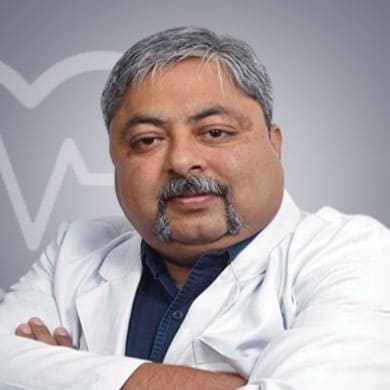
Dr. Vidit Tripathi
ENT Surgeon
24 Years of Experience
One of the finest ENT Surgeon in New Delhi, India, Dr. Vidit Tripathi, has worked with several world class multidisciplinary hospitals over the years. Dr. Vidit Tripathi has over 24+ years of experience in his field. The specialist treats and manages a wide range of conditions such as Goiter, Radiation Necrosis in Neck, Neck Injury, Perforates Eardrum View More
Last Reviewed - January 2026