Oligodendroglioma Treatment in Malaysia
- Top Accredited Hospitals
- Global Medical Standards
- Cutting-Edge Technology
- Proven Treatment Options
- High Success Rate
- Trusted by Millions

What is Oligodendroglioma?
As a tumor of the central nervous system, oligodendroglioma affects the brain (and in rare cases, the spinal cord). It begins in a particular kind of glial cell, which supports the nervous system. Even when oligodendroglioma is malignant, experts believe it is a fairly curable tumor with generally good survival rates.
What can I expect if my parents have Oligodendroglioma?
Depending on where the tumor is located in the brain, your parents may have symptoms like seizures, headaches, difficulty speaking, weakness or numbness on one side of the body, balance problems, and difficulty thinking and remembering things.
What are the Common Symptoms of Oligodendroglioma?
Oligodendrogliomas, like many brain tumours, frequently don't show any symptoms until they start to disrupt the surrounding brain tissue. Seizures or headaches are the most typical symptoms. Approximately 80% of patients with oligodendroglioma will experience a seizure as a result of the cancer. This is because oligodendrogliomas frequently impact the cerebral cortex, the wrinkled outer layer of the brain. The brain regions that govern many of your daily skills, including vision, language, muscular control, and more, are located in the cortex. Other symptoms include:
- Weakening or paralysis of the muscles, particularly on one side of the face or body
- Loss of hearing
- Aphasia is the inability to communicate or understand what others are saying, clouded vision, double vision, or vision loss.
- Issues with memory
- Difficulty focusing or thinking
Causes, Risk Factors and Complications of Oligodendroglioma
Causes
Oligodendroglioma is thought to be caused by genetic abnormalities that lead to aberrant cell proliferation in the brain, while the precise reason is unknown. Genes that control tumour suppression and cell division may be impacted by these alterations.
Risk Factors
There are currently no known risk factors for oligodendroglioma. However, some research suggests that prior radiation therapy, such as that used to treat other cancers, may be a risk factor for the development of gliomas, which are related tumours. More investigation is required to determine whether something could be a cause or contributing factor.
Complications
Because oligodendrogliomas impact the brain, they may result in various issues. The location of the oligodendroglioma, along with any other medical disorders one may have, will determine the complications the patient may have.
Connect with our advisor for a PRIORITY response
Latest Research and Technologies in the Treatment of Oligodendroglioma in Malaysia
In Malaysia, oligodendroglioma is being treated with a mix of radiation therapy, chemotherapy regimens such as PCV and temozolomide, and surgical excision. Modern institutions like Sunway and Gleneagles provide state-of-the-art services, including stereotactic radiosurgery and IMRT. Additionally, new targeted medicines, such as FDA-approved Vorasidenib for IDH-mutant cancers and IDH1 inhibitors like Ivosidenib, are being investigated. Continuous research and a multidisciplinary approach improve patient outcomes and quality of life.
Oligodendroglioma Prevention Tips
The causes and risk factors for oligodendrogliomas are unknown to experts. As a result, there is no method to avoid it or lower your chances of developing it.
Treatment options for Oligodendroglioma
Chemotherapy: Oligodendroglioma can be effectively treated with some chemotherapeutic medications. The following are the most likely chemotherapy treatments.
Cost Start From USD 1500 - USD 3500Explore Options
Radiation treatment: Oligodendroglioma is frequently treated with radiation therapy. With this method, tumour cells are subjected to enough energy to be destroyed. The radiation is aimed as accurately as it can be.
A medical professional will use a variety of techniques to diagnose oligodendroglioma, such as:
- A neurological and physical examination
- Imaging for diagnosis
- A pathology test and a brain biopsy
Because diagnostic imaging allows medical professionals to "see" within your skull, it is particularly crucial when oligodendrogliomas are present. The following scans are the most likely to be helpful:
Computed tomography (CT) scans: Following a seizure or other focused symptoms, these are frequently the initial imaging tests performed. Because they contain calcium, your bones appear bright on CT and X-ray images. Because oligodendrogliomas frequently include calcium, they frequently exhibit a brilliant appearance.
MRI Imaging: The many structures inside your head can be readily seen on magnetic resonance imaging (MRI) images. They can assist in pinpointing the exact location and size of an oligodendroglioma.
Treatment for oligodendroglioma can damage brain regions involved in motor control and cognitive function. Following therapy, you may require assistance to regain your mobility, speech, vision, and cognitive function.
- Physical therapy is one treatment that may help patients regain lost muscle strength or motor skills.
- Following a brain tumour or other sickness, occupational therapy can assist patients in returning to their regular activities, including their jobs..
- Speech therapy might be beneficial if you have trouble communicating.
School-age children can benefit from tutoring to help them deal with memory and cognitive changes following a brain tumour.
Depending on the situation, your healthcare professional may prescribe medicine to help control your symptoms and support the treatment plan.
Instantly Connect with our Specialists


Hospitals for Oligodendroglioma in Malaysia
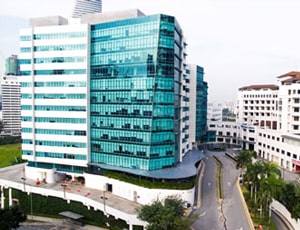
Parkway Pantai
Kuala Lumpur, Malaysia
Parkway Pantai located in Kuala Lumpur, Malaysia is accredited by JCI. Also listed below are some of the most prominent infrastructural details:
- Capacity of 335 beds
- 200+ specialist Doctors
- Critical Care Unit
- Neonatal Intensive Care Unit
- Operating Theatre
- International Patient Care Center
- Types of rooms available- Premier Suite, Supreme Suite, Deluxe Single Room, 2-bedded room, 4-bedded room, Deluxe Suite, Premier Single room, and Supreme Single room

Sunway Medical Centre
Kuala Lumpur, Malaysia
Sunway Medical Centre has initiated a comprehensive expansion plan close to its current hospital facility to enhance its ability to provide services to the global market. The new Cancer Radiosurgery Center and Nuclear Medicine Center, which will also house additional Centers of Excellence like the Digestive Health Center and Dialysis Center, marked the completion of Tower C's first phase in October 2016.

Prince Court Medical Centre
Kuala Lumpur, Malaysia
Prince Court is a private medical facility in the center of Kuala Lumpur that has 277 individual beds. Our dedication is to provide you with the best treatment possible from the time you arrive until you depart, healthier and happier. We are well-known for our top-notch facilities, cutting-edge technology, and friendly customer service.
Our Services to better your experience
Opinion & Option
We submit the most accurate opinion and options from one or more countries for your review
Consult Privately
Consult with a certified specialist privately on our telemedicine platform even before you decide to travel
Logistics
We handle flights, visas, transfers, and accommodation—so you can focus on your health.
Recovery
Our In-house rehabilitation service packages to better your recovery and treatment outcome
Why Choose Malaysia for Olfactory Neuroblastoma Treatment?
Here are some of the reasons for choosing Malaysia:
Due to advancements in medical facilities, such as minimally invasive surgical techniques.
- World-class experts include highly experienced doctors and JCI-accredited healthcare institutions.
- Compared to other countries, treatment in Malaysian hospitals is cost-effective.
- Malaysian hospitals provide international patient services, including a multilingual support system.
Frequently Asked Questions
Although they are not strictly "curable," oligodendrogliomas are treatable malignancies. The most common treatment for oligodendroglioma is to remove the entire tumour, or as much of it as feasible. Your care team will next assess if chemotherapy, radiation therapy, or a combination of these treatments is required to eliminate any cancer cells that may still be present.
In Malaysia, oligodendroglioma is well treated with targeted medicines such as protein inhibitors, proton therapy, and sophisticated surgical procedures.
Malaysia hospitals have state-of-the-art technology to treat oligodendrogliomas. This includes advanced molecular diagnostics, proton therapy for targeted radiation, and awake craniotomy for accurate tumour removal.
Always consider the following factors when selecting Malaysian hospitals:
- Hospitals that are accredited (authorised by JCI).
- Patient reviews and success rates.
- Hospitals that provide seamless care to patients from abroad.
In Malaysia, oligodendroglioma treatment is highly successful, particularly for instances with a gene mutation. Proton therapy, awake craniotomy, and targeted therapies are examples of modern treatments that have been shown to improve survival and quality of life.
Despite its seriousness, Oligodendroglioma is a more curable brain tumour than other gliomas. It is frequently identified by symptoms like seizures or chronic headaches, which call for imaging testing and medical care to be diagnosed. Since even low-grade tumours can potentially develop into malignant ones, early therapy is essential to stopping their progression.
Although long-term survivors of oligodendroglial tumours can suffer from cognitive impairment in as many as 38% of instances, oncological treatment greatly increases survival. This has been connected to structural brain damage, which emphasises the need for improved methods to maintain cognitive function.
For the management of oligodendroglioma, your healthcare professional will assist in selecting the most effective course of treatment and make sure you have frequent follow-up sessions. It's critical to adhere to treatment regimens and seek advice from the medical staff regarding any possible adverse effects.
You can see top neuro and oncology specialists, hospitals and doctors in Malaysia for a second opinion on Oligodendroglioma treatment. Numerous prestigious medical facilities consult with skilled doctors who will examine your diagnosis and suggest the best course of action. You can get support by speaking with a medical tourism facilitator at MediGence to select the best doctor and facility. It provides specialised rehabilitation programs.
Author

Dr. Shagufta Parveen
Dr. Shagufta Parveen is a Clinical researcher and medical writer with expertise in clinical pharmacology and pharmacotherapeutics. She holds a B.Pharm and Doctor of Pharmacy (Post-Baccalaureate) degree from Teerthanker Mahaveer University, Moradabad.
During her clinical stint at BLK-Max Super Speciality Hospital and Indraprastha Apollo Hospital, she gained hands-on experience in the Clinical Pharmacology Department. Combining scientific knowledge with strong medical writing skills, Dr. Shagufta develops evidence-based healthcare content, treatment guides, and patient education resources.
Her work focuses on simplifying complex medical concepts while maintaining scientific accuracy, helping readers better understand healthcare advancements and treatment options.
In addition to her writing expertise, she is actively involved in scientific research and has contributed to peer-reviewed publications.
Her research work is accessible through the following links:
https://scholar.google.com/citations?user=lMVK1eIAAAAJ&hl=en
https://carcinogenesis.com/index.php/JOC/article/view/870
https://carcinogenesis.com/index.php/JOC/article/view/868
https://wjpsronline.com/abstract/0000000760
View MoreReviewer

Dr. Mohit Agarwal
Medical Oncologist
14 Years of Experience
One of the finest Oncologist in New Delhi, India, Dr. Mohit Agarwal has worked with several world class multidisciplinary hospitals over the years. Dr. Mohit Agarwal has over 14+ years of experience in his field. The doctor treats and manages a wide range of conditions such as Stomach Cancer, Rectal Cancer, Breast Cancer, Brain Cancer View More
Last Reviewed - January 2026