Nerve Sheath Tumor Treatment in Malaysia
- Top Accredited Hospitals
- Global Medical Standards
- Cutting-Edge Technology
- Proven Treatment Options
- High Success Rate
- Trusted by Millions

What is Nerve Sheath Tumor?
One kind of tumor of the nervous system that is mainly composed of the myelin that surrounds nerves is called a nerve sheath tumor.
What can I expect if my child has a Nerve Sheath Tumor?
You might see a lump or painless swelling, generally in your child's arms or legs. You might notice that your child limps or struggles to use their hands, arms, legs, or feet.
Your child will require follow-up appointments with a neurologist. Your youngster will get a thorough physical examination and a number of diagnostic tests ordered by a neurologist. Blood tests, biopsies, and advanced imaging investigations are examples of testing. Following the completion of all required tests, the doctor will talk with you about the results and suggested course of treatment.
What are the Common Symptoms of Nerve Sheath Tumor?
Weakness, numbness, and discomfort are among the symptoms. A lump or tumor beneath the skin may also be felt by the patient.
Causes, Risk Factors and Complications of Nerve Sheath Tumor
Causes
The cause of the majority of sporadic nerve sheath tumor cases is unknown. In some cases, they are a component of a hereditary disorder that is characterized by numerous tumors of the nerve sheath, such as NF1, NF2, or schwannomatosis.
Risk Factors
Peripheral nerve sheath tumor risk factors include the following:
- Cancer treatment using radiation: Ten to twenty years following radiation treatment, a malignant peripheral nerve sheath tumor may develop in the treated area.
- Nerve tumors that are not malignant: Non-cancerous nerve tumors like neurofibroma can give rise to peripheral nerve sheath tumors.
- A family-inherited ailment: Individuals with neurofibromatosis 1 are more likely to develop malignant peripheral nerve sheath tumors. Nerve tumors are more likely to occur in this scenario.
Complications
Pain, numbness, weakness, loss of function in the afflicted muscles due to nerve compression, the possibility of nerve damage during surgery, sensory deficiencies, and in rare instances, malignant transformation of a benign tumor are all consequences of nerve sheath tumors.
Connect with our advisor for a PRIORITY response
Latest Research and Technologies in the Treatment of Nerve Sheath Tumour in Malaysia
Advanced surgical methods, radiation therapy, and new targeted therapies, including protein inhibitors for NF1-related cancers are all helping to treat nerve sheath tumors in Malaysia. For aggressive situations, chemotherapy alternatives are also being investigated. In order to improve patient outcomes, local medical facilities are incorporating these strategies through multidisciplinary care and worldwide research collaborations, while genetic testing is becoming increasingly important as a guide for tailored therapies.
Nerve Sheath Tumour Prevention Tips
Although there are currently no preventative measures for nerve sheath tumors because the exact cause of the majority of cases is unknown, seeing a doctor for early detection through routine checkups is crucial to managing potential nerve sheath tumors if you have a family history of genetic conditions like neurofibromatosis type 1 or 2, which can increase your risk.
Treatment options for Nerve Sheath Tumor
Chemotherapy: Chemotherapy has less effect on malignant peripheral nerve sheath tumors. Although chemotherapy is rarely effective in curing tumors, it can be administered to try to reduce their size or slow their growth.
Cost Start From USD 1500 - USD 3500Explore Options
Microsurgery: Due to its high success rate in maintaining neurological function, microsurgery for nerve sheath tumors is frequently regarded as the preferred method for benign nerve sheath tumors. It involves a highly skilled surgeon using a microscope and delicate instruments to carefully remove a tumor from a peripheral nerve, with the goal of minimizing damage to the surrounding healthy nerve tissue and preserving function by carefully dissecting around the tumor's fascicles (nerve bundles) within the nerve itself.
Radiation therapy: Following surgery, radiotherapy can eradicate any remaining cancer cells. This occurred when the malignancy could not be completely removed by your surgeon. It also seeks to reduce the likelihood of recurrent sarcoma. We refer to this as adjuvant treatment.
Nerve sheath tumors may typically be assessed and diagnosed using MRI. In certain situations, the doctor might suggest a biopsy to make a diagnosis, such as when there are worries that the tumor might be cancerous.
A nerve sheath tumor may appear on imaging such as an MRI or ultrasound when a person is being evaluated for one of the symptoms listed above. Or the tumor can be an incidental finding - discovered when a doctor is using MRI to examine a person for something else, such as lower back pain.
Patients could require physical rehabilitation following surgery. To maintain an arm or leg in a position that promotes healing, the Doctor could prescribe a brace or a splint. Patients can regain function and mobility that have been lost as a result of nerve injury or limb amputation with the assistance of physical and occupational therapists.
Chemotherapy drugs are used for treatment to kill fast-growing cancer cells in nerve sheath tumors.
Instantly Connect with our Specialists


Hospitals for Nerve Sheath Tumor in Malaysia
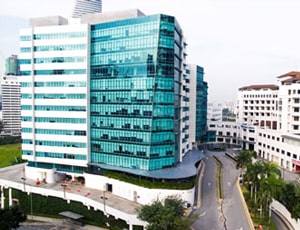
Parkway Pantai
Kuala Lumpur, Malaysia
Parkway Pantai located in Kuala Lumpur, Malaysia is accredited by JCI. Also listed below are some of the most prominent infrastructural details:
- Capacity of 335 beds
- 200+ specialist Doctors
- Critical Care Unit
- Neonatal Intensive Care Unit
- Operating Theatre
- International Patient Care Center
- Types of rooms available- Premier Suite, Supreme Suite, Deluxe Single Room, 2-bedded room, 4-bedded room, Deluxe Suite, Premier Single room, and Supreme Single room

Sunway Medical Centre
Kuala Lumpur, Malaysia
Sunway Medical Centre has initiated a comprehensive expansion plan close to its current hospital facility to enhance its ability to provide services to the global market. The new Cancer Radiosurgery Center and Nuclear Medicine Center, which will also house additional Centers of Excellence like the Digestive Health Center and Dialysis Center, marked the completion of Tower C's first phase in October 2016.

Prince Court Medical Centre
Kuala Lumpur, Malaysia
Prince Court is a private medical facility in the center of Kuala Lumpur that has 277 individual beds. Our dedication is to provide you with the best treatment possible from the time you arrive until you depart, healthier and happier. We are well-known for our top-notch facilities, cutting-edge technology, and friendly customer service.
Our Services to better your experience
Opinion & Option
We submit the most accurate opinion and options from one or more countries for your review
Consult Privately
Consult with a certified specialist privately on our telemedicine platform even before you decide to travel
Logistics
We handle flights, visas, transfers, and accommodation—so you can focus on your health.
Recovery
Our In-house rehabilitation service packages to better your recovery and treatment outcome
Why Choose Malaysia for Treatment of Nerve Sheath Tumour?
Here are some of the reasons for choosing Malaysia:
- Due to advancements in medical facilities, such as minimally invasive microsurgical techniques. World-class experts include highly experienced doctors and JCI-accredited healthcare institutions.
- Compared to other countries, treatment in Malaysian hospitals is cost-effective.
- Malaysian hospitals provide International patient services, including a multilingual support system.
- Improved treatment methods and biological therapies.
Frequently Asked Questions
Yes, the majority of tumors in the nerve sheath are benign. Surgery and microsurgery can be used to treat them, and they seldom return. If surgery is unable to remove the tumor entirely, it will need to be monitored continuously. A combination of chemotherapy, radiation, and microsurgery is administered for malignant nerve sheath tumors.
In Malaysia, nerve sheath tumours are effectively treated; for better results in Malignant Peripheral Nerve Sheath Tumours (MPNST) patients, surgical resection is frequently coupled with chemotherapy and radiation therapy. Treatment success is further improved by cutting-edge methods like stereotactic radiation, especially for malignancies in vital regions.
Malaysian hospitals have advanced treatment plans for treating nerve sheath tumours, including stereotactic radiation, sophisticated imaging, and surgical methods. These technologies allow for accurate detection and efficient therapy, particularly for complicated or incurable malignancies.
Always consider the following factors when selecting Malaysian hospitals:
- Hospitals that are accredited (authorised by JCI).
- Patient reviews and success rates.
- Hospitals that provide seamless care to patients from abroad.
There is little precise information on the success rates of treating nerve sheath tumors in Malaysia. Nonetheless, worldwide research shows that, depending on variables such tumor size, location, and surgical margins, the 5-year survival rate for malignant peripheral nerve sheath tumors (MPNSTs) varies from 23% to 69%.
- You must be on the lookout for the following typical symptoms:
- A lump or painless swelling, commonly in the arms or legs.
- Muscle or nerve compression causing pain or soreness.
- Nerve loss occurs when the tumour spreads.
- Limpness or trouble using the hands, arms, legs, or feet.
These neurofibrosarcoma tumours are highly likely to occur in children with neurofibromatosis type 1. Because these tumours affect the tissue that is elastic and easily manipulated, they can be challenging to find and identify.
Nerve Sheath Tumour cannot be detected before birth; hence, it cannot be treated.
You can see Malaysia's top Neuro hospitals and doctors for a second opinion on Nerve Sheath tumour treatment. Numerous prestigious medical facilities consult with skilled doctors who will examine your diagnosis and suggest the best course of action. You can get support by speaking with a medical tourism facilitator at MediGence to select the best doctor and facility. It provides specialised rehabilitation programs.

Reviewer

Dr. Mohit Agarwal
Medical Oncologist
14 Years of Experience
One of the finest Oncologist in New Delhi, India, Dr. Mohit Agarwal has worked with several world class multidisciplinary hospitals over the years. Dr. Mohit Agarwal has over 14+ years of experience in his field. The doctor treats and manages a wide range of conditions such as Stomach Cancer, Rectal Cancer, Breast Cancer, Brain Cancer View More
Last Reviewed - January 2026