Nearsightedness (Myopia) Treatment in Thailand
- Top Accredited Hospitals
- Global Medical Standards
- Cutting-Edge Technology
- Proven Treatment Options
- High Success Rate
- Trusted by Millions

What is Nearsightedness?
Myopia, often known as nearsightedness, is a common refractive defect in which nearby items appear distinct, but distant objects appear blurry. Light focuses in front of the retina rather than directly on it when the eye is too long or the cornea is excessively curved. Some symptoms are squinting, headaches, eye strain, and blurred distance vision. Refractive surgery, contact lenses, and glasses can all be used to treat myopia. It is generally diagnosed before 20 years of age.
What are the Common Symptoms of Nearsightedness?
If you are nearsighted, you might observe:
- Distant objects appear fuzzy or blurry.
- Closed objects are as apparent.
- Headaches.
- Eye strain.
- Squinting.
- Fatigue, whether from playing sports, driving, or spotting farther than a few feet away.
Other myopia symptoms you should keep an eye out for in your kids include:
- Inadequate academic achievement.
- Reduced capacity for focus.
- Keeping things near their face.
Causes and Risk Factors of Nearsightedness
Causes
- Genetics: Nearsightedness is more likely if one or both parents have myopia.
- Excessive screen use, reading, and close-up work can strain the eyes and accelerate the development.
- Absence of Outdoor Exposure: Spending little time outside limits exposure to natural light, which controls eye growth and guards against the eyeball becoming overly lengthy.
- Abnormal eye growth occurs when the cornea is too curved or the eyeball is too long, which makes it difficult for light to focus correctly on the retina.
- Underlying Medical Conditions: Several illnesses, including diabetes, may be linked to myopia development.
Risk Factors
Among the risk factors for nearsightedness are:
- There is a history of myopia in the family.
- Much time is spent on close-up tasks, such as reading or utilising screens like those on computers or cell phones.
- Avoid being outside too much. According to some research, this could contribute to the development of myopia.
- Ethnicity. Myopia is more prevalent in specific age brackets than others.
Connect with our advisor for a PRIORITY response
Latest Research and Technologies in the Treatment of Nearsightedness Thailand
Advanced technologies, such as a minimally invasive bladeless technique offered at Thailand Hospital, have been embraced by Thailand for the treatment of nearsightedness. High precision and speedy recovery are guaranteed with bladeless LASIK. These developments demonstrate Thailand's dedication to provide state-of-the-art, secure, and efficient vision correction solutions.
Nearsightedness(Myopia) Prevention Tips
To prevent Myopia, one should follow the following tips:
- Increase Outdoor Time: Exposure to natural sunshine for at least two hours each day can lower the incidence of myopia and decrease its progression.
- Limit Screen Time & Near Work
- Use Appropriate Lighting: To avoid needless eye strain, ensure appropriate lighting is present when reading or using screens.
- Keep a Healthy Distance: Keep screens at arm's reach and reading materials at least 14 inches away.
- Maintain a Healthy Diet: For eye health, eat foods high in omega-3 fatty acids and vitamins A, C, and E.
- Frequent eye exams can help control the progression of myopia by detecting it early through yearly screenings.
Treatment options for Nearsightedness (Myopia)
Lasik: Laser-Assisted In Situ Keratomileusis, or LASIK, is a common surgical technique that uses a laser to reshape the cornea to treat myopia. A thin corneal flap is made, the underlying tissue is reshaped using an excimer laser, and the flap is then repositioned to allow for spontaneous healing. Long-term vision enhancement, low discomfort, and a speedy recovery are all benefits of LASIK. However, people with thin corneas, dehydrated eyes, or unstable prescriptions might be unable to use it.
Cost Start From USD 2500 - USD 4500Explore Options
Various Options for Diagnostics for Near-Sightedness:
- The Visual Acuity Test uses an eye chart, a Snellen chart, to measure vision clarity.
- Refraction tests determine the proper prescription for contact lenses or glasses.
- Retinoscopy measures how light bounces off the retina to determine refractive errors.
- Autorefractor & Aberrometry: This technique measures the ability of the eyes to focus using electronic tools.
MediRehab (a chain of Rehab centres, part of MediGence) provides comprehensive rehabilitation services to support patients through Teleconsulations and online therapy sessions.
- Lifestyle Modifications: Engaging in outdoor activities, limiting screen time, and adhering to the 20-20-20 rule promote eye health.
- Vision therapy: Eye exercises and strategies to enhance concentration and lessen strain.
Although there is no specific medication for Myopia, several medications can help control symptoms and halt the condition's growth. These consist of lubricating eye drops, anti-allergy medicines, and Anti-inflammatory medicines.
Instantly Connect with our Specialists


Hospitals for Nearsightedness (Myopia) in Thailand
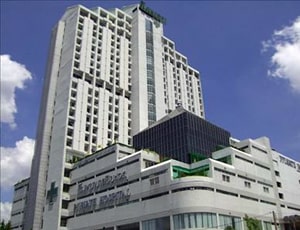
Piyavate Hospital
Bangkok, Thailand
Piyavate Hospital located in Bangkok, Thailand is accredited by JCI. Also listed below are some of the most prominent infrastructural details:
Medicine Centre: Piyavate Hospital provides advanced holistic treatment for their patients. They offer a complete range of services and physicians that specialize in various fields like the endocrine system, the nervous system, kidney function, cardiovascular care, respiratory and digestive system. They pride themselves for the familial care that they provide to their patients.
Fertility and In-Vitro Fertilization Centre: Helping the couples who walk into the Piyavate Hospital to achieve their dream of having a family. They have a medical team that specializes in male and female fertility. They offer consultation services, fertility check-up for both men and women and complete IVF services. They have advanced IVF cycle treatment facilities that offer a high rate of success.
Bone and Joint Institute: Piyavate Hospital houses one of the frontrunners in Orthopaedic health care in all of SouthEast Asia. They offer a wide range of services and surgeries in their bone and joint institute that include hand surgery, hip and knee replacement surgery, spinal cord surgery, upper extremity surgery, arthroscopic surgery and sports medicine.
Eye and Lasik Centre: Piyavate Hospital is fully equipped with the latest and most advanced technology for eye care and houses highly skilled ophthalmologists, sub-specialists and qualified nurses.
Physical Therapy and Rehabilitation Centre: One of the first hospitals to be equipped with the Hybrid Assistive Limb technology that will help a neurologically challenged patient to control the rehabilitation robot limb with a signal from their brain. The Physical Therapy and Rehabilitation Centre at Piyavate Hospital uses this system encourage patients to regain muscle memory to walk and function normally.
Amenities for Patient’s Family:
Piyavate Hospital also offers additional apartment facilities to house the kin of the patients who come to visit them from distant places. A restaurant, a flower shop and a café are a few of the other amenities provided by the hospital.
These are the most popular services offered by the Piyavate Hospital in Bangkok, Thailand. They also provide a plethora of other medical services that are listed below:
Diabetic Foot Centre
Check-up centre
Urology Centre
Heart Institute
Paediatric Centre
Obstetrics and Gynaecology Centre
Surgery Centre
Ear Nose Throat Centre
Haemodialysis Centre
Dental Centre
X-Ray Centre
Gastroenterology Centre
Cancer Centre
Neonatal Intensive Care Unit (NICU)
Emergency Services and Centre
Tele-medicine
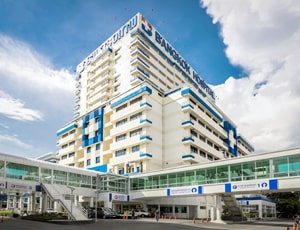
Bangkok Hospital
Bangkok, Thailand
Bangkok Hospital located in Bangkok, Thailand is accredited by JCI. Also listed below are some of the most prominent infrastructural details:
- It is recognised for the application of the newest healthcare technology.
- Blood analysis center that is not just the best in Thailand but in Asia Pacific as well.
- Biomolecule center that is the seed of healthcare equipment for Thailand and overseas.
- International affiliations and collaborations with universities and hospitals in Japan and the United States of America.
- 11 hospitals are recognised as Centers of Excellence.
- Known excellence in Trauma, Orthopedics, Cardiovascular, Neurology as well as Cancer Care.
- There is a proper streamlined patient services process followed in Bangkok Dusit Medical Services, Bangkok, Thailand.
- A well developed research center showcases the intent of the organisation to provide research based treatment opportunities to the patients.
- The group has several Medical industry partnerships as well to ensure healthcare solutions.

Sikarin Hospital
Bangkok, Thailand
Apart from in-detail treatment procedures available, Sikarin Hospital located in Bangkok, Thailand has a wide variety of facilities available for International Patients. Some of the facilities which are provided by them are Airport Transfer, Choice of Meals, Interpreter, SIM, TV inside room. Also listed below are some of the most prominent infrastructural details:
- Sikarin Hospital has a 258-bed capacity.
- The hospital caters to the healthcare needs of both local and international patients.
- Dedicated and skilled, experienced healthcare professionals are the strength of the organization.
It has also received many awards and certifications and some of them are:
- APSIC CSSD Center of Excellence Award (2017-18)
- Accreditation by the Joint Commission International
- HA-Hospital/Healthcare Accreditation
- HACCP Certificate of Registration
- The Best Under a Billion Award
- ISO 14001 Environment Management System
- ISO 9001 Quality Management System
The various clinics and centers of Sikarin Hospital are as follows:
- Pediatric Institute
- Orthopedic Institute
- Dental Center
- Health Check-up Center
- Heart Disease Center
- Cerebral and Nervous System Center
- Internal Medicine Clinic
- Diagnostic Radiology Center
- Diagnostic Laboratory
- Endoscopic Surgery Center
- International Medical Center
- Emergency Medical Center
- Sikarin Beauty Center
- Eye Center
- Rehabilitation Center
- Women’s Health Center
- Ear, Nose and Throat Center
- Specialized Internal Medicine Center
- Center for Gastrointestinal and Liver Diseases
The medical technology present in Sikarin Hospital is outlined here:
- MRI (Magnetic Resonance Imaging) magnetic resonance imaging
- Hybrid Operating Room
- Endoscopic Surgery - Gastrointestinal medical technology with tiny capsules
- S.R. Laboratory
- Cardiac Catheterization Lab
- Dental Operating Microscope, an innovative endoscopic root canal treatment
- 128-Slice CT Scan
- ORTHOPANTOMOGRAPH OP 3D oral X-ray machine
- Digital Mammogram
- Optical Coherence Tomography
- INFRARED (IR) IMAGING Surgical Technology “Cure Cancer” – Direct, Accurate, Fast
- 3D endoscopic surgery technology
- Laparoscopic Surgery
- Dental Aerosol Suction Dental Intraoral Aerosol Remover
- Comprehensive Dental Center
- iTeroElement 5D
Our Services to better your experience
Opinion & Option
We submit the most accurate opinion and options from one or more countries for your review
Consult Privately
Consult with a certified specialist privately on our telemedicine platform even before you decide to travel
Logistics
We handle flights, visas, transfers, and accommodation—so you can focus on your health.
Recovery
Our In-house rehabilitation service packages to better your recovery and treatment outcome
Why Choose Thailand for Nearsightedness Treatment?
Thailand is a popular place to treat myopia because it combines affordability, knowledge, and cutting-edge medical facilities. Here are some of the reasons for choosing Thailand:
- Advanced Medical Technology: At prestigious eye hospitals in Thailand, state-of-the-art procedures like LASIK & SMILE.
- Highly Qualified Ophthalmologists: Thailand eye doctors are known worldwide for their proficiency in laser eye surgery and myopia treatment.
- Reasonably priced treatment: In Thailand, the price of LASIK, prescription lenses, and other eye procedures is far less than in Western nations.
- Comprehensive Treatment Options: Patients can access pharmaceutical, non-pharmacological, and surgical options, such as tailored lenses and atropine drops.
- Medical Tourism Facilities: Several hospitals provide overseas patients with packages that cover consultation, surgery, lodging, and aftercare.
Frequently Asked Questions
Nearsightedness can be treated without surgery. The primary forms of treatment consist of:
- The most straightforward and popular remedial action is wearing glasses.
- Compared to glasses, contact lenses provide superior peripheral vision.
- Orthokeratology (Ortho-K): This involves temporarily reshaping the cornea with special hard lenses worn overnight.
- Refractive Surgery: LASIK, SMILE, and ELITA SILK are procedures that can reshape the cornea to correct myopia for those who want permanent correction.
Like in many other regions of Asia, nearsightedness is rather widespread in Thailand because of a combination of lifestyle and genetic factors, including reading habits and extended screen usage. The demand for cutting-edge vision correction treatments has been rising as a result of the prevalence, particularly among younger people.
Analysis of myopia is essential for identifying problems early and preventing them. It consists of retinal imaging, vision, and refraction tests to evaluate eye conditions. Children, individuals with a family history, and those with blurred, distant vision must all get regular screenings.
Following are some of the long-term complications of untreated Myopia:
- Increased Risk of Eye Conditions: Greater likelihood of retinal detachment, glaucoma, and cataracts.
- Myopic maculopathy and other consequences, such as severe vision impairment, can result from progressive myopia.
- Decreased Quality of Life: Challenges with everyday tasks like reading and driving.
- Increased Medical Expenses: More complex conditions may need surgery and ongoing care.
Most hospitals in Thailand offer the following:
- Assistance in obtaining visas.
- Airport Service to and from the hospitals.
- Multilingual experts and Best accommodations services.
- Personalised treatment plans for patients from abroad.
When selecting the best myopia treatment, you should consider Top facilities in Thailand that specialise in LASIK and cutting-edge eye care institutions accredited with JCI, which must always be checked. Examine the surgeon's background, foreign education, and patient testimonials.
To treat nearsightedness, Thailand hospitals use cutting-edge technologies like SMILE (Small Incision Lenticule Extraction), ELITA SILK Laser, Contoura Vision, and Femtosecond LASIK. Modern laser vision correction techniques are available at Eye hospitals for secure and efficient care.
Treatment for nearsightedness is quite successful; contemporary techniques have a high success rate in enhancing vision. with 96% of patients acheiving desired vision correction.
Yes, employing cutting-edge methods and other innovative procedures, Thai doctors have extensive experience treating nearsightedness. They offer top-notch care with an emphasis on safety and accuracy, are highly trained, and are frequently accredited globally.
Following laser eye surgery for nearsightedness, most patients recover quickly and can see clearly in as little as 24 to 48 hours. Procedures like ELITA SILK Laser provide the quickest recovery durations, enabling patients to return to regular activities in as little as one day. However, complete eyesight stabilisation could take a few weeks, depending on the technique.
Yes, you can see top eye hospitals and doctors in Thailand for a second opinion on Myopia treatment. Numerous prestigious medical facilities provide consultations with skilled ophthalmologists who will examine your diagnosis and suggest the best course of action.

Reviewer
Dr. Vidit Tripathi
ENT Surgeon
24 Years of Experience
One of the finest ENT Surgeon in New Delhi, India, Dr. Vidit Tripathi, has worked with several world class multidisciplinary hospitals over the years. Dr. Vidit Tripathi has over 24+ years of experience in his field. The specialist treats and manages a wide range of conditions such as Goiter, Radiation Necrosis in Neck, Neck Injury, Perforates Eardrum View More
Last Reviewed - January 2026