Hip Dysplasia Treatment in United Arab Emirates
- Top Accredited Hospitals
- Global Medical Standards
- Cutting-Edge Technology
- Proven Treatment Options
- High Success Rate
- Trusted by Millions

What is Hip Dysplasia?
Hip dysplasia arises when the bones in your hip joint do not fit correctly.
Most cases of hip dysplasia occur in infants and young children, but mild forms can also occur in adults. Doctors sometimes refer to hip dysplasia in newborns as congenital hip dysplasia or developmental dysplasia of the hip (DDH). All of these names sometimes refer to the condition.
What is the Importance of Timely Treatment?
The hip should be treated immediately to prevent joint damage, reduce pain, and maintain hip function. An improved quality of life and a reduced need for more invasive surgeries in the future can result from early intervention to prevent issues such as arthritis or joint dislocation.
What are the Common Symptoms of Hip Dysplasia?
There are a few Common symptoms of hip dysplasia, including
Hip Pain: Pain in the outer thigh, groin, or hip, especially while walking, standing, or sitting for a long time.
Stiffness: Being unable to move the hip joint easily or with freedom.
Limping: A limp is an abnormal gait, especially when running or walking.
Clicking or popping sounds: sounds in the hip joint during movement.
Instability: The feeling of the hip joint "giving way" or feeling unstable, especially during activities.
Causes and Risk Factors of Hip Dysplasia
Causes
- Genetics: Hip dysplasia is more common in families with a history of the condition.
- Abnormal development: A malformed or shallow hip socket may arise from the malformation of the hip joint in the pregnancy.
- Pregnancy Positioning: Babies who are born breech, that is, feet or buttocks first, have a higher chance of hip dysplasia.
Risk Factors
- Gender
- Family History
- Breech Birth
- Firstborn Children
- Excessive Swaddling
Connect with our advisor for a PRIORITY response
Latest Research and Technologies in the Treatment of Hip Dysplasia in the United Arab Emirates
In the United Arab Emirates, recent developments in hip dysplasia treatment centre on early detection and precision surgery. Studies have shown that the Gulf Cooperation Council region's female population had a higher incidence of developmental dysplasia of the hip (DDH), which was detected early through universal newborn hip ultrasound screening, especially using the Graf method. Furthermore, more precise and customised operations are made possible by the use of robotic-assisted hip replacement surgery, improving patient outcomes and hastening recovery.
Hip Dysplasia Prevention Tips
Hip dysplasia cannot always be avoided, but it can be decreased through early discovery and proper treatment. Appropriate prenatal care, tight swaddling, and placing babies on their tummies can also help.
Babies need early screening to treat problems promptly, especially if they have risk factors. Adults can also take control of hip health by keeping a healthy weight and attending regular check-ups. Hip dysplasia can be minimised by timely detection and adequate treatment.
Treatment options for Hip Dysplasia
Hip Dysplasia Treatment: Depending on its degree, hip dysplasia typically is managed through physical therapy, pain control, or surgery. In the worst cases, hip replacement or corrective surgery can improve the function of the joints.
Cost Start From USD 5000 - USD 15000Explore Options
Total-hip-replacement-bl: Total hip replacement (THR) in hip dysplasia is to restore mobility and alleviate pain by replacing an artificial hip for the affected one. When conservative treatment fails or joint destruction is severe, it is usually recommended.
Cost Start From USD 9500 - USD 21000Explore Options
Osteotomy: With osteotomy to treat hip dysplasia, the hip bone is altered to enhance alignment and joint function; this is typically done on younger patients to delay or prevent hip replacement surgery.
Cost Start From USD 9000 - USD 18000Explore Options
- Clinical assessment:
- Physical Examination: The healthcare professional looks for any obvious indication of joint pain or swelling around the hip region and any malformation near it, such as a limp or uneven leg length.
- Range-of-motiontests: The physician estimates the range of motion by measuring how much the leg can twist, extend, or rotate. Hip mobility limitations, such as pain and restricted range of motion, commonly manifest as dysplasia symptoms.
- Stability Tests: The Ortolani and Barlow tests are usually done in babies diagnosed with hip dysplasia to assess joint stability and detect dislocations. The FABER (Flexion, Abduction, External Rotation) test can be applied to adults to examine hip joint instability and pain.
- Imaging Tests:
- X-rays are essential for detecting abnormal bone formation, misalignment, and joint space narrowing.
- MRIScans: MRI can provide fine pictures of the soft tissues, including muscles, ligaments, and cartilage. This would allow medical practitioners to determine the extent of damage or degeneration to the hip joint.
- Ultrasound: Neonates and early infants are often assessed for hip joint stability, and ultrasound is used to identify soft tissue injuries, fluid collection, and joint inflammation. It is beneficial for early diagnosis before the bones have entirely ossified.
- Other diagnostic:
- Walking and Weight-Bearing Examination: This includes determining the degree to which the patient can bear their weight on the affected hip joint. A healthcare provider assesses signs of pain, inappropriate weight-bearing, or limping by observing the patient's posture and gait.
- Hip dysplasia can affect muscle function and joint stability, so a balance test helps assess neuromuscular control. This is particularly crucial in adults because the illness can cause joint instability, discomfort, and impaired balance.
MediRehab (a chain of Rehab centres, part of MediGence) provides comprehensive rehabilitation services to support patients through teleconsultations and online therapy sessions. A few of the services such as:
- Physical therapy: Specific exercises to enhance joint stability, flexibility, and strength in the hip muscles.
- Stretching: Mild stretches promote more significant movement and comfort by increasing hip flexibility and reducing stiffness.
- StrengtheningExercises: To enhance support for the hip joint, focus on strengthening your glutes, core, and hip abductors.
- Low-Impact Activities: Low-impact exercises that do not put a lot of stress on the hips, such as swimming or cycling, can keep you fit.
- Posture and Gait Training: A physical therapist may guide posture and walking techniques to reduce hip stress and improve movement.
- Pain Management Techniques: In rehabilitation, ultrasound and ice/heat therapy can help manage pain and swelling.
- Depending on the severity of the condition, your healthcare professional may prescribe medicine to help control your symptoms and support the treatment plan.
Instantly Connect with our Specialists


Hospitals for Hip Dysplasia in United Arab Emirates

Zulekha Hospital Dubai
Dubai, United Arab Emirates
- A highly skilled multidisciplinary medical staff supports patients through the hospital's advanced diagnostic capabilities, joint replacement surgeries, cardiac catheterisation, neonatal intensive care, and specialised cancer care and rehabilitation services. The hospital uses the latest technology and is internationally accredited for providing quality healthcare based on scientific evidence, providing safe, high-quality care to patients, providing individualised treatment plans, and providing services to international patients.

Zulekha Hospital Sharjah
Sharjah, United Arab Emirates
- A highly skilled multidisciplinary medical staff supports patients through the hospital's advanced diagnostic capabilities, joint replacement surgeries, cardiac catheterisation, neonatal intensive care, and specialised cancer care and rehabilitation services. The hospital uses the latest technology and is internationally accredited for providing quality healthcare based on scientific evidence, delivering safe, high-quality care to patients, offering individualised treatment plans, and serving international patients.

Prime Hospital
Dubai, United Arab Emirates
Prime Hospital located in Dubai, United Arab Emirates is accredited by ISO, JCI. Also listed below are some of the most prominent infrastructural details:
- Capacity for 100 beds
- 24-hour Emergency Service
- Advanced Cardiac Cath Lab
- Adult Intensive Care Unit
- Paediatric Intensive Care Unit
- Coronary Care Unit
- Neonatal Intensive Care Unit
- Maternity & Child floor
- Day Surgery Unit
- Family Clinic
- Deluxe rooms and Spacious Lounge
Our Services to better your experience
Opinion & Option
We submit the most accurate opinion and options from one or more countries for your review
Consult Privately
Consult with a certified specialist privately on our telemedicine platform even before you decide to travel
Logistics
We handle flights, visas, transfers, and accommodation—so you can focus on your health.
Recovery
Our In-house rehabilitation service packages to better your recovery and treatment outcome
Why Choose the United Arab Emirates for Hip Dysplasia Treatment?
The United Arab Emirates offers world-class medical facilities, skilled orthopaedic specialists, and affordable treatment options for hip dysplasia. With cutting-edge technologies, comprehensive care including rehabilitation, and the option for teleconsultation, patients can access high-quality care remotely.
Frequently Asked Questions
Depending on the seriousness of the disease and the symptoms a person is experiencing, hip dysplasia can indeed be treated non-surgically. Here are a few possibilities for non-surgical treatment:
Physical Therapy can provide exercises that strengthen the muscles surrounding the hip joint, lessen pain and increase flexibility.
Medication: Anti-inflammatory nonsteroidal medications may be prescribed to reduce pain and inflammation. Corticosteroid injections are sometimes used to treat more severe symptoms.
Weightloss reduces pressure on the hips, which might treat symptoms, especially when the cause is obesity.
Hip dysplasia surgery can be highly effective if done relatively early, depending on the degree of progression. Younger individuals can be less uncomfortable and avoid further damage by having the hip socket realigned using procedures such as periacetabular osteotomy (PAO). In much worse situations, total hip replacement (THR) significantly improves functions and reduces pain.
Hip dysplasia can affect any age group. It is commonly diagnosed in infants and treated with bracing. It may cause children to limp or have difficulty walking. It can occur later in young adults, necessitating surgeries like periacetabular osteotomy (PAO). If not treated, hip dysplasia in older individuals leads to arthritis, which is often treated with total hip replacement (THR).
Yes, hip dysplasia can cause arthritis to develop over time. The condition causes a shallow or improperly formed hip socket, which causes uneven wear on the cartilage. This additional stress on the cartilage may lead to degeneration, inflammation, and, finally, arthritis because the joint becomes unstable. This is common in individuals with decades of undiagnosed or poorly treated hip dysplasia.
The United Arab Emirates offers excellent medical treatment at affordable rates with highly trained staff and advanced equipment. The country's excellent environment and culture make it a great location for recuperation.
Hip dysplasia can sometimes run in families. If one or more family members have the disorder, the chances of developing an increased hip joint are generally increased because of genetics; some inherited features may contribute to misalignment.
Hip dysplasia can impair mobility by causing pain, stiffness, and instability in the hip joint. The joint's misalignment causes abnormal cartilage wear and tear, resulting in a reduced range of motion and discomfort during movement. This can make walking, running, climbing stairs, or even sitting for long periods difficult.
Yes, hip dysplasia can be diagnosed in infants, usually during routine checks shortly after birth. Paediatricians use physical exams, including the Ortolani and Barlow tests, to check for hip instability. If there is a suspicion, an ultrasound may confirm the diagnosis. Early detection is essential because the condition can be effectively treated with non-invasive methods, like a Pavlik harness, if addressed in the first few months of life, preventing long-term complications.
Untreated hip dysplasia can cause long-term effects such as stiffness, arthritis, and chronic discomfort as the joint experiences abnormal wear and tear. Eventually, it can significantly reduce mobility by causing joint instability, resulting in limping or trouble moving. In extreme situations, untreated dysplasia can cause joint deformity, requiring more invasive procedures such as hip replacement. Therefore, early diagnosis and treatment are essential to avoid these problems.
In the UAE, recovery from hip dysplasia surgery depends on the operation and age. Adults typically take three to six months to recuperate, while infants might take six to twelve weeks in a cast. Robotic and minimally invasive surgeries save recovery time. The key to restoring your motion is physical therapy.
Yes, hip dysplasia may recur after treatment, especially if it is not fully resolved or if it is not treated early. In some cases, arthritis or instability can occur due to the continued deterioration of the hip joint over time. Adults with untreated or partially treated hip dysplasia when they were younger are more prone to this. However, with proper therapy, such as total hip replacement (THR) or periacetabular osteotomy (PAO), the risk of recurrence is significantly reduced, and most patients remain symptom-free in the long term.
Healthy weight maintenance to reduce joint stress, low-impact exercises such as swimming or cycling, and strengthening the hip muscles to increase stability can all be considered in managing hip dysplasia. Regular stretching, better posture and gait, and avoiding high-impact activities can also help control pain, prevent further problems, and enhance hip function.
Yes, the United Arab Emirates provides hip dysplasia treatment that is safe and effective due to its world-class facilities, experienced orthopaedic surgeons, and state-of-the-art medical equipment.
Author

Dr. Shagufta Parveen
Dr. Shagufta Parveen is a Clinical researcher and medical writer with expertise in clinical pharmacology and pharmacotherapeutics. She holds a B.Pharm and Doctor of Pharmacy (Post-Baccalaureate) degree from Teerthanker Mahaveer University, Moradabad.
During her clinical stint at BLK-Max Super Speciality Hospital and Indraprastha Apollo Hospital, she gained hands-on experience in the Clinical Pharmacology Department. Combining scientific knowledge with strong medical writing skills, Dr. Shagufta develops evidence-based healthcare content, treatment guides, and patient education resources.
Her work focuses on simplifying complex medical concepts while maintaining scientific accuracy, helping readers better understand healthcare advancements and treatment options.
In addition to her writing expertise, she is actively involved in scientific research and has contributed to peer-reviewed publications.
Her research work is accessible through the following links:
https://scholar.google.com/citations?user=lMVK1eIAAAAJ&hl=en
https://carcinogenesis.com/index.php/JOC/article/view/870
https://carcinogenesis.com/index.php/JOC/article/view/868
https://wjpsronline.com/abstract/0000000760
View MoreReviewer
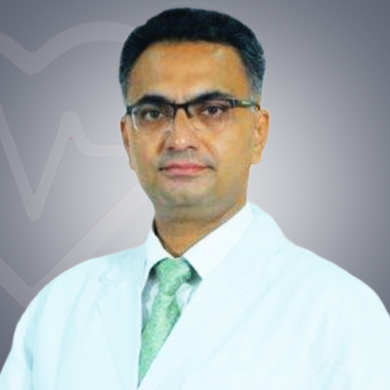
Dr. Puneet Mishra
Orthopaedic Surgeon
25 Years of Experience
Known among his patients for treating with compassion and personal care, Dr. Puneet Mishra is one of the best orthopedic surgeons in New Delhi. Dr. Puneet completed his MBBS from Maulana Azad Medical College in 1996 and from the same college he completed his MS (orthopedics) in 2000. With almost 25+ years of surgical experience under him, Dr. Pankaj takes pride in working with some of the finest medical institutions of the world such as University Hospital, Bern, Maulana Azad Medical College, New Delhi, Endoklinik, Germany, and Professor and Consultant orthopedician at Guru Teg Bahadur Hospital, New Delhi. View More
Last Reviewed - January 2026