Fuchs' Endothelial Dystrophy Treatment in India
- Top Accredited Hospitals
- Global Medical Standards
- Cutting-Edge Technology
- Proven Treatment Options
- High Success Rate
- Trusted by Millions

What is Fuchs' endothelial dystrophy?
Fuchs endothelial dystrophy is a condition that causes vision problems. It is a type of posterior corneal dystrophy that affects the innermost layer of corneal endothelial cells and Descemet’s membrane (the basement membrane). It leads to loss of corneal endothelial cells, causing fluid buildup (oedema) and the formation of small bumps called guttata, which decreases visual clarity.
What is the Importance of Timely Treatment?
Timely treatment of Fuchs dystrophy is critical to prevent permanent visual loss and avoid invasive surgery. Early intervention can lead to faster recovery, lower rejection risk, and better outcomes, such as fewer painful blisters and less morning vision loss.
What are the common symptoms of Fuchs' endothelial dystrophy?
Symptoms and their intensity can vary depending on the condition. The following describes the symptoms associated with the disease.
- Reduced corneal clarity
- Eye movement-induced pain
- Impaired vision at night or in low light
- Reduced visual acuity (decreased central vision)
- Cloudiness
- Redness and swelling
- Glare or sensitivity to light
- Blurred vision
Causes and Risk Factors of Fuchs' Endothelial Dystrophy
Causes
- TCF4 gene changes: Changes in the TCF4 gene are particularly associated with Fuchs’ endothelial dystrophy. These changes can produce abnormal RNA that interferes with normal corneal endothelial cell function.
- COL8A2 mutations: Changes in the COL8A2 gene are linked to early-onset forms of Fuchs’ endothelial dystrophy and may cause corneal changes at a younger age.
- Other genes: Changes in genes and other factors may also increase the risk of developing FED in some people.
Risk Factors
- Age: The earliest signs of Fuchs’ dystrophy may be visible in people in their 30s and 40s. But the disease usually affects vision after age 50.
- Sex: Research shows evidence that females are at higher risk than males.
- Family history: It is more common in people with a biological family history, which increases risk.
- Smoking: It increases oxidative stress, which can damage corneal endothelial cells.
- Previous eye surgery: Procedures like cataract surgery can put extra strain on corneal cells, especially in people who are already at risk.
- UV exposure: Long-term ultraviolet exposure may cause small deposits called guttae to form in the cornea.
- Hormonal: Hormonal factors may also influence FED progression, as the condition is more prevalent in postmenopausal women, which is linked to estrogen deficiency
Latest Research and Technologies in the Treatment of Fuchs' Endothelial Dystrophy in India
- Newer approaches, including DWEK (Descemetorhexis without endothelial keratoplasty) combined with ROCK inhibitors and improved DMEK (Descemet Membrane Endothelial Keratoplasty) techniques, are being studied to support corneal healing and improve surgical outcomes. Researchers are also exploring regenerative treatments, including gene therapies and gene editing.
Treatment options for Fuchs' Endothelial Dystrophy
Inner corneal transplant: Descemet membrane endothelial keratoplasty, or DMEK, is a surgical procedure in which the back layer of the cornea is replaced with healthy endothelial cells from a donor.
Cornea transplant: If you previously had eye surgery, an eye care professional may suggest a partial-thickness cornea transplant, known as Descemet-stripping endothelial keratoplasty, or DSEK. In rare cases, you may need a complete cornea transplant, known as penetrating keratoplasty (PK).
Cost Start From 2000Explore Options
- Clinical assessment:
- Eye examination: Clinical assessment involves a comprehensive eye examination and a detailed clinical evaluation of the condition, followed by a medical history and physical examination
- Slit-lamp examination: Performed to look for changes in the corneal structure, particularly bumps called guttata and corneal swelling. Visual ability is also checked to see how the condition affects vision.
- Imaging Tests:
- Specular microscopy: Examines the endothelial cells and assesses their number, size, and shape.
- Pachymetry: It measures the corneal thickness to track fluid accumulation
- Optical tomography: A noninvasive imaging method that uses images of the back of your eye using reflected light.
- Lubricating eye drops and preservative-free artificial tears minimise ocular surface irritation and discomfort from corneal oedema. Topical steroids and mild anti-inflammatories may reduce endothelial oxidative stress, leading to transient improvements in corneal clarity. However, long-term use requires monitoring.
Instantly Connect with our Specialists


Hospitals for Fuchs' Endothelial Dystrophy in India

Apollo Hospitals Bannerghatta
Bangalore, India
Apollo Hospitals Bannerghatta located in Bengaluru, India is accredited by JCI, NABH. Also listed below are some of the most prominent infrastructural details:
- Bed Capacity is 250
- Largest and most sophisticated sleep laboratory in the world
- Technological powerhouse with latest equipments
- 120 slice CT angiogram
- 3 Tesla MRI
- Low energy & High energy Linear Accelerators
- Navigation System in surgical procedures
- 4-D Ultrasound for 4 dimensional sonography
- Digital Fluoroscopy
- Gamma Camera
- Stereotactic Robotic Radio- surgery
- Autologous Bone Marrow Transplantation
- Robotic assisted surgeries
- Thallium Laser-First in India
- Holmium Laser-First in South India
- Digital X-Ray-First in Karnataka
- 100 plus consultants
- Uses Y shaped stent for tracheoesophageal fistula
- Four autologous chondrocyte implantations procedure is performed and several more like Spinal angiolipoma excision, Tibial tuberosity shift with MPSL reconstruction
- Biggest series of airway stents in India
- The Minimal Access Surgery Centre (MASC) centre of excellence
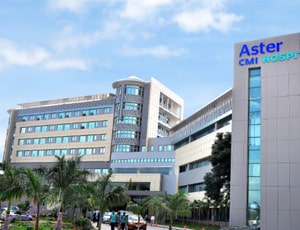
Aster CMI Hospital
Bangalore, India
Aster CMI Hospital located in Bengaluru, India is accredited by JCI, NABH. Also listed below are some of the most prominent infrastructural details:
- Around 500 bed capacity
- Primary care to Quaternary care services
- Outpatient and inpatient departments
- Day care center for small children
- Availability of Surgical suites
- Intensive Care Units
- 24-hour Emergency and Trauma Care
- Emergency Unit especially for children
- Newly launched the Lung and Heart Transplant Centre
- Video Consultation with doctors available on GraphMyHealth
- A specialised Aster Center of Excellence for Women & Children
- Latest Minimally Invasive Procedures being performed
- Safe Interventional Procedures
- Control of Infection protocols are strictly followed
- Aster Holistic Collaborative Care: Aster Palliative Care for lowering suffering if critically ill patients, Physical Medicine & Rehabilitation, Aster Wellness, Psychology, Chronic Pain Management, Nutrition & Dietetic, Podiatry Care etc.
- 11 Centers of Excellence
- An academics focus with BSc Program, MEM Program, Pediatric Fellowship Program
- A streamlined International patient care center with dedicated services and technology enabled processes

Batra Hospital
Delhi, India
- More than 35 years of trusted healthcare service
- Multi-specialty tertiary care with over 30 departments
- Comprehensive preventive, diagnostic, and therapeutic care under one roof
- International patient coordination team for seamless overseas care
Our Services to better your experience
Opinion & Option
We submit the most accurate opinion and options from one or more countries for your review
Consult Privately
Consult with a certified specialist privately on our telemedicine platform even before you decide to travel
Logistics
We handle flights, visas, transfers, and accommodation—so you can focus on your health.
Recovery
Our In-house rehabilitation service packages to better your recovery and treatment outcome
Why Choose India for Fuchs' Endothelial Dystrophy Treatment?
- Specialised corneal surgeons: major eye centres have highly experienced corneal and endothelial disorder specialists and world-renowned, dedicated eye centres.
- Advanced procedures: Selected centres perform DMEK and DSAEK, which replace the damaged endothelial layer while preserving most of the patient's cornea.
- Modern diagnostic testing: Patients may have access to specular microscopy, corneal tomography, pachymetry, and anterior-segment OCT to support diagnosis and treatment planning.
- Access to newer approaches: Indian centres are also involved in research on the latest approaches.
- Telemedicine service: Telemedicine services and AI-powered diagnostics improve access, making India a leading destination for corneal transplants at a fraction of the cost without compromising quality.