Bullous Keratopathy Treatment in Thailand
- Top Accredited Hospitals
- Global Medical Standards
- Cutting-Edge Technology
- Proven Treatment Options
- High Success Rate
- Trusted by Millions

What is Bullous Keratotherapy?
A corneal condition known as bullous keratopathy is typified by corneal swelling (edema) and blisters filled with fluid (bullae). It happens when the cornea's endothelial cells, which remove extra fluid to preserve corneal clarity, are harmed or malfunction. This causes fluid to build up in the cornea, which impairs vision and causes pain and discomfort.
What are the Common Symptoms of Bullous Keratopathy?
- Cloudy or blurry vision brought on by corneal edema.
- Discomfort or soreness in the eyes that frequently gets worse under bright light.
- A feeling of grit in the eye or a foreign body.
- Heightened light sensitivity (photophobia).
- Eyes that are watery (too much crying).
- Formation of blisters on the cornea called bullae, which are packed with fluid and can potentially burst, causing excruciating agony.
Causes and Risk Factors of Bullous Keratopathy
Causes
- Fuchs' Endothelial Dystrophy is a degenerative disorder that weakens the endothelial cells in the cornea.
- Complications of Eye Surgery: Endothelial cell damage can result during intraocular lens implantation, corneal transplants, or cataract surgery.
- Eye Trauma or Injury: Endothelial cell dysfunction may be brought on by direct corneal injury.
- Extended Eye Inflammation: Corneal health may be impacted by chronic uveitis or other inflammatory diseases.
Risk Factors
- Due to the expected loss of endothelium cells, aging is more prevalent in older persons.
- Prior Eye Surgery: Individuals with several eye surgeries are more vulnerable.
- Underlying Eye Diseases: Bullous keratopathy is more likely to occur in people with glaucoma, corneal dystrophies, or infections.
- Extended Use of Contact Lenses: Inappropriate contact lens use can lead to ocular stress and injury.
Connect with our advisor for a PRIORITY response
Latest Research and Technologies in the Treatment of Bullous Keratopathy in Thailand
With cutting-edge substitutes for conventional corneal transplantation, Thailand is improving the treatment of bullous keratopathy. Rho-associated kinase (ROCK) inhibitors, which encourage endothelial cell regeneration, and corneal endothelial cell injections, which restore corneal clarity without needing donor tissue, are emerging therapeutics. Artificial endothelium implants are also being developed to replace damaged layers without surgery. These developments improve patient outcomes by providing more accessible and less invasive therapy options.
Treatment options for Bullous Keratopathy
Cornea Transplant: Bullous keratopathy is commonly treated with a corneal transplant (keratoplasty). The degree of endothelial degradation impacts the possibility of a corneal transplant.
Cost Start From USD 3000 - USD 4500Explore Options
Comprehensive eye examinations are performed to determine Corneal thickness, endothelial cell activity, and disease severity by using:
- Slit-lamp Biomicroscopy, Corneal Pachymetry
- Optical Coherence Tomography (OCT)
- Specular Microscopy
MediRehab (a chain of Rehab centres, part of MediGence) provides comprehensive rehabilitation services to support patients through Teleconsulations and online therapy sessions.
- Lifestyle Modifications: Engaging in outdoor activities, limiting screen time, and adhering to the 20-20-20 rule promote eye health.
- Vision therapy: Eye exercises and strategies to enhance concentration and lessen strain.
Depending on the situation, your healthcare professional may prescribe medicine to help control your symptoms and support the treatment plan.
Instantly Connect with our Specialists


Hospitals for Bullous Keratopathy in Thailand
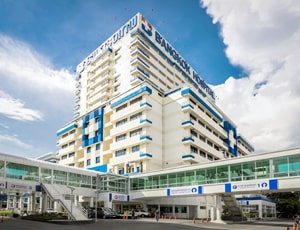
Bangkok Hospital
Bangkok, Thailand
Bangkok Hospital located in Bangkok, Thailand is accredited by JCI. Also listed below are some of the most prominent infrastructural details:
- It is recognised for the application of the newest healthcare technology.
- Blood analysis center that is not just the best in Thailand but in Asia Pacific as well.
- Biomolecule center that is the seed of healthcare equipment for Thailand and overseas.
- International affiliations and collaborations with universities and hospitals in Japan and the United States of America.
- 11 hospitals are recognised as Centers of Excellence.
- Known excellence in Trauma, Orthopedics, Cardiovascular, Neurology as well as Cancer Care.
- There is a proper streamlined patient services process followed in Bangkok Dusit Medical Services, Bangkok, Thailand.
- A well developed research center showcases the intent of the organisation to provide research based treatment opportunities to the patients.
- The group has several Medical industry partnerships as well to ensure healthcare solutions.

Bangpakok 9 International Hospital
Bangkok, Thailand
Bangpakok 9 International Hospital located in Bangkok, Thailand is accredited by JCI. Also listed below are some of the most prominent infrastructural details:
- It would be prudent to summarise the Medical Services provided at the Bangpakok 9 International Hospital (BPK 9), Bangkok, Thailand:
- Cosmetic Dentistry
- Dental Implants
- Electrocardiogram (EKG or ECG)
- Exercise Stress Test
- Health Screening
- Laser Vagina Firming
- Pediatric Physical Therapy
- Perfect Slim by Vela II
- Physical Therapy for Musculoskeletal
- Prosthodontics
- The Medical Services are also inclusive of the International Patient Services such as the ones listed here:
- Thai, English, French, Arabic, Chinese, Myanmar, Cambodia, Bangladeshi, Bahasa and Tagalog are the languages in which there are Translation services available for International Patients.
- Visa extension related assistance
- International health insurance related assistance
- Embassy and international organizations related assistance
- A variety of meals of choice for International Patients
- Email consultation services
- Transfer to either airport and/or hotels
- Prayer room
- Four different types of rooms are available such as Deluxe room, two kinds of suites, and a VIP suite.
- Hospital facilities like The Coffee shop, Food Hall, Cafe and Medical Spa.
- Complete health and safety protocols are maintained in the various Medical Centers some of whom are as follows:
- Aesthetic Center
- 24 Hour Emergency Center
- Allergy Center
- Breast Center
- bSmart Center
- Checkup Center
- Dental Center,
- Happy Long Life Center
- Medical Fitness Center
- Psychiatric Center
- Rehabilitation Center
- Sleep Disorders Center
Our Services to better your experience
Opinion & Option
We submit the most accurate opinion and options from one or more countries for your review
Consult Privately
Consult with a certified specialist privately on our telemedicine platform even before you decide to travel
Logistics
We handle flights, visas, transfers, and accommodation—so you can focus on your health.
Recovery
Our In-house rehabilitation service packages to better your recovery and treatment outcome
Why Choose Thailand for Bullous Keratopathy
Highly qualified ophthalmologists are skilled professionals with training in cutting-edge corneal procedures, including Keratoprosthesis, DMEK, and DSAEK.
- Modern Technology: Top eye hospitals offer cutting-edge laser treatments, AI-assisted diagnostics, and high-resolution imaging.
- Cost-effective Treatment: Excellent care at a fraction of the price of Western nations.
- High Success Rates: Corneal transplant operations in Thailand have a high success rate, guaranteeing better vision and a quicker recovery.
- Access to Advanced Treatments: Bioengineered corneas, regenerative therapies, and innovative drugs are all available.
- World-Class Eye Care Facilities: Hospitals with international accreditation that provide complete eye care with individualised treatment programs.
- The advantages of medical tourism include hassle-free immigration assistance, reasonably priced lodging, and smooth medical care for individuals from abroad.
Frequently Asked Questions
Bullous Keratopathy does not always require surgery because mild instances can be treated with bandage contact lenses, hypertonic saline drops, and pain and swelling-relieving drugs. However, surgical treatments such as DMEK, DSAEK, or keratoprosthesis can be required to restore vision and alleviate discomfort in extreme situations.
Bullous keratopathy is rather prevalent in Thailand, especially in senior people and those who have had eye surgeries like cataracts.
A thorough examination of bullous keratopathy is necessary to determine the extent of endothelial cell destruction and corneal edema. To identify the optimum course of treatment and avoid consequences like vision loss or corneal scarring, it uses sophisticated diagnostic techniques like slit-lamp examination, specular microscopy, optical coherence tomography (OCT), and pachymetry.
Untreated Bullous Keratopathy can result in recurring blisters, corneal scarring, severe vision impairment, chronic pain, and possibly corneal ulceration or infection. A whole corneal transplant (PKP) may be necessary to restore eyesight.
To ensure a seamless experience for patients from abroad, most hospitals in Thailand offer the following:
- Assistance in obtaining visas.
- Airport Service to and from the hospitals.
- Multilingual experts and Best accommodations services.
- Personalised treatment plans for patients from abroad.
- Travel planning, language translators, and reasonably priced lodging.
Yes, hospitals in Thailand have state-of-the-art equipment for treating bullous keratopathies, such as ROCK inhibitors, endothelial cell therapy, and sophisticated corneal transplants.
Bullous keratopathy treatment in Thailand has a good success rate, mainly when using cutting-edge techniques like endothelial cell therapy and corneal transplantation..
Yes, Thailand is home to highly qualified ophthalmologists and corneal specialists who have received training and experience abroad in the most recent surgical and non-surgical techniques for treating Bullous Keratopathy.
Although recovery times vary by treatment, most patients show noticeable improvement 4–6 weeks following DMEK or DSAEK. With the proper post-operative care, a full recovery, including the best possible visual clarity, could take three to six months.
Yes, you can see top eye hospitals and doctors in Thailand for a second opinion on Bullos Keratopathy treatment. Numerous prestigious medical facilities provide consultations with skilled ophthalmologists who will examine your diagnosis and suggest the best course of action.

Reviewer
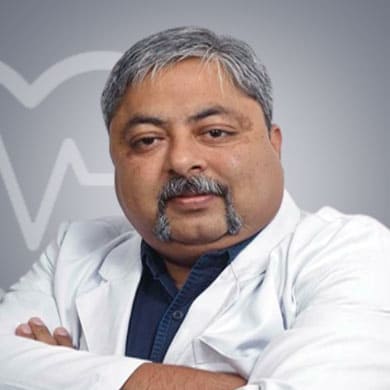
Dr. Vidit Tripathi
ENT Surgeon
24 Years of Experience
One of the finest ENT Surgeon in New Delhi, India, Dr. Vidit Tripathi, has worked with several world class multidisciplinary hospitals over the years. Dr. Vidit Tripathi has over 24+ years of experience in his field. The specialist treats and manages a wide range of conditions such as Goiter, Radiation Necrosis in Neck, Neck Injury, Perforates Eardrum View More
Last Reviewed - January 2026