Auditory Neuropathy Spectrum Disorder Treatment in Thailand
- Top Accredited Hospitals
- Global Medical Standards
- Cutting-Edge Technology
- Proven Treatment Options
- High Success Rate
- Trusted by Millions

What is an Auditory Neuropathy Spectrum Disorder?
Auditory Neuropathy Spectrum Disorder (ANSD) is a hearing disorder in which the inner ear may detect sound, but the transmission or timing of auditory signals to the brain is disrupted. The condition can affect the inner hair cells, connections between inner hair cells and auditory neurons, the auditory nerve, or related auditory pathways. People with ANSD may have hearing sensitivity ranging from normal to severe or profound hearing loss.
What is the Importance of Timely Treatment?
Timely diagnosis matters because it can significantly affect hearing and speech development, especially in infants and young children. ANSD can remain stable in some people, improve in others, or worsen depending on the underlying cause. Early audiological assessment lets clinicians monitor hearing, speech perception, auditory development, and communication skills, and determine whether hearing aids, assistive listening devices, cochlear implantation, or other communication approaches may be appropriate.
What are the Common Symptoms of an Auditory Neuropathy Spectrum Disorder?
- Hearing loss ranging from mild to profound
- Difficulty understanding speech, particularly in noisy environments
- Speech perception that is poorer than expected from the hearing threshold
- Delayed speech and language development in children
- Difficulty recognising or understanding spoken words
- Sounds seeming unclear, distorted, inconsistent, or out of sync
- Hearing that may fluctuate over time
- Difficulty following conversations despite being able to detect sounds
- Poor response to spoken instructions in infants and young children
- Delayed development of auditory skills
- Tinnitus in some older children or adults
- Communication difficulties affecting daily life
Causes and Risk Factors of Auditory Neuropathy Spectrum Disorder
Causes
- Genetic variants affecting inner hair cells, auditory synapses, or auditory nerve function
- Prematurity and complications associated with very low birth weight
- Severe neonatal hyperbilirubinemia (jaundice)
- Hypoxia or oxygen deprivation around birth
- Genetic or mitochondrial disorders affecting auditory function
- Peripheral neuropathies, including certain forms of Charcot-Marie-Tooth disease and Friedreich's ataxia
- Congenital abnormalities of the cochlea or auditory nerve
- Acquired neurological or auditory nerve disorders
- Unknown or unidentified causes in some patients
Risk Factors
- Premature birth or very low birth weight
- Severe neonatal jaundice
- Hypoxia or other significant complications around birth
- Family history of hearing loss or inherited neurological disorders
- Genetic, metabolic, or mitochondrial conditions associated with auditory dysfunction
- Peripheral neuropathy or other neurological disorders affecting hearing
Latest Research and Technologies in the Treatment of Auditory Neuropathy Spectrum Disorder in Thailand
- Current management of ANSD emphasizes detailed electrophysiological and audiological evaluation because conventional hearing thresholds alone may not reflect the patient's ability to understand speech. A characteristic diagnostic pattern is an absent or markedly abnormal auditory brainstem response (ABR) together with preserved otoacoustic emissions (OAEs), although these findings can change over time and require clinical interpretation. Additional tests such as cochlear microphonic assessment, electrocochleography, auditory steady-state responses, speech-perception testing, and other electrophysiological assessments may be used in selected cases.
Treatment options for Auditory Neuropathy Spectrum Disorder
Hearing Aids and Assistive Listening Devices: Hearing aids may benefit selected patients, particularly those with measurable hearing loss who obtain useful speech understanding from amplification.
Cochlear Implantation : Consider a cochlear implant for selected patients with severe or profound hearing loss who receive inadequate benefit from appropriately fitted hearing aids.
Cost Start From 22000Explore Options
- Clinical assessment:
- Medical and Hearing History: Evaluation includes the age at onset, newborn hearing-screening results, hearing fluctuations, speech and language development, difficulty understanding speech, neonatal complications, severe jaundice, prematurity, oxygen deprivation, infections, medication exposure, family history, neurological symptoms, and previous hearing interventions.
- Audiological Assessment: Comprehensive hearing assessment may include pure-tone audiometry, behavioural audiometry, speech audiometry, speech-perception testing, tympanometry, and acoustic reflex testing.
- Auditory Electrophysiological Assessment: ABR and OAE testing are central to ANSD evaluation. A typical pattern includes absent or severely abnormal ABR responses with preserved OAEs, although findings can vary by cause and stage of the disorder.
- Neurological and Developmental Assessment: Neurological examination may be recommended when there are signs of peripheral neuropathy, developmental abnormalities, balance problems, muscle weakness, or other neurological symptoms.
- Imaging Tests:
- MRI of the Brain and Internal Auditory Canals: May be used to assess the cochlea, auditory nerves, internal auditory canals, brainstem, and other neurological structures, particularly when cochlear implantation is being considered or when structural or neurological abnormalities are suspected.
- CT of the Temporal Bone: May be useful for assessing cochlear and temporal-bone anatomy and selected structural abnormalities.
- Cochlear and Auditory Nerve Imaging: Detailed imaging can help determine whether the cochlear nerve and inner-ear structures are suitable for cochlear implantation.
- Additional Neurological Imaging: Consider brain or spinal imaging when symptoms suggest an associated neurological disorder.
MediRehab (a chain of Rehab centres, part of MediGence) provides comprehensive tele-rehabilitation services designed to support patients with Auditory Neuropathy Spectrum Disorder in Thailand. These Services include:
- Auditory Rehabilitation: Structured auditory training can help patients develop or improve the ability to detect, recognise, and interpret sounds, particularly after hearing-aid fitting or cochlear implantation.
- Speech and Language Therapy: Children with delayed speech or language development may require regular therapy to support communication and language skills.
- Hearing-Aid and Cochlear-Implant Rehabilitation: Audiologists can optimize hearing devices and provide ongoing programming, monitoring, and rehabilitation after cochlear implantation.
- There is no medication that directly cures ANSD in all patients. Medical treatment depends on the underlying cause, if one can be identified. Associated metabolic, infectious, neurological, or systemic conditions may require specific treatment. Clinicians may also review potentially ototoxic medicines when appropriate. For persistent ANSD, management generally focuses on hearing technology, auditory and communication rehabilitation, and regular audiological monitoring.
Instantly Connect with our Specialists


Hospitals for Auditory Neuropathy Spectrum Disorder in Thailand
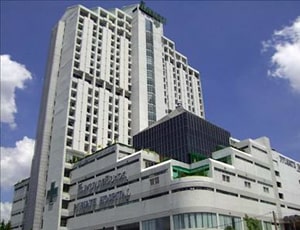
Piyavate Hospital
Bangkok, Thailand
Piyavate Hospital located in Bangkok, Thailand is accredited by JCI. Also listed below are some of the most prominent infrastructural details:
Medicine Centre: Piyavate Hospital provides advanced holistic treatment for their patients. They offer a complete range of services and physicians that specialize in various fields like the endocrine system, the nervous system, kidney function, cardiovascular care, respiratory and digestive system. They pride themselves for the familial care that they provide to their patients.
Fertility and In-Vitro Fertilization Centre: Helping the couples who walk into the Piyavate Hospital to achieve their dream of having a family. They have a medical team that specializes in male and female fertility. They offer consultation services, fertility check-up for both men and women and complete IVF services. They have advanced IVF cycle treatment facilities that offer a high rate of success.
Bone and Joint Institute: Piyavate Hospital houses one of the frontrunners in Orthopaedic health care in all of SouthEast Asia. They offer a wide range of services and surgeries in their bone and joint institute that include hand surgery, hip and knee replacement surgery, spinal cord surgery, upper extremity surgery, arthroscopic surgery and sports medicine.
Eye and Lasik Centre: Piyavate Hospital is fully equipped with the latest and most advanced technology for eye care and houses highly skilled ophthalmologists, sub-specialists and qualified nurses.
Physical Therapy and Rehabilitation Centre: One of the first hospitals to be equipped with the Hybrid Assistive Limb technology that will help a neurologically challenged patient to control the rehabilitation robot limb with a signal from their brain. The Physical Therapy and Rehabilitation Centre at Piyavate Hospital uses this system encourage patients to regain muscle memory to walk and function normally.
Amenities for Patient’s Family:
Piyavate Hospital also offers additional apartment facilities to house the kin of the patients who come to visit them from distant places. A restaurant, a flower shop and a café are a few of the other amenities provided by the hospital.
These are the most popular services offered by the Piyavate Hospital in Bangkok, Thailand. They also provide a plethora of other medical services that are listed below:
Diabetic Foot Centre
Check-up centre
Urology Centre
Heart Institute
Paediatric Centre
Obstetrics and Gynaecology Centre
Surgery Centre
Ear Nose Throat Centre
Haemodialysis Centre
Dental Centre
X-Ray Centre
Gastroenterology Centre
Cancer Centre
Neonatal Intensive Care Unit (NICU)
Emergency Services and Centre
Tele-medicine

Phyathai 2 International Hospital
Bangkok, Thailand
Phyathai 2 International Hospital located in Bangkok, Thailand is accredited by JCI. Also listed below are some of the most prominent infrastructural details:
- Fully equipped rooms are available for convenience of the patients- Gold B Room, Gold A Room, Pediatric Gold A, Platinum room, and Prestige ward
- Nearby accommodations are also available- Abloom Service Apartments, Bangkok Patio, VIB Best Western Sanam Pao, VIC3 Hotel
- Operating room
- International Patient Medical Center to assist overseas patients
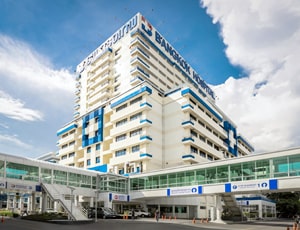
Bangkok Hospital
Bangkok, Thailand
Bangkok Hospital located in Bangkok, Thailand is accredited by JCI. Also listed below are some of the most prominent infrastructural details:
- It is recognised for the application of the newest healthcare technology.
- Blood analysis center that is not just the best in Thailand but in Asia Pacific as well.
- Biomolecule center that is the seed of healthcare equipment for Thailand and overseas.
- International affiliations and collaborations with universities and hospitals in Japan and the United States of America.
- 11 hospitals are recognised as Centers of Excellence.
- Known excellence in Trauma, Orthopedics, Cardiovascular, Neurology as well as Cancer Care.
- There is a proper streamlined patient services process followed in Bangkok Dusit Medical Services, Bangkok, Thailand.
- A well developed research center showcases the intent of the organisation to provide research based treatment opportunities to the patients.
- The group has several Medical industry partnerships as well to ensure healthcare solutions.
Our Services to better your experience
Opinion & Option
We submit the most accurate opinion and options from one or more countries for your review
Consult Privately
Consult with a certified specialist privately on our telemedicine platform even before you decide to travel
Logistics
We handle flights, visas, transfers, and accommodation—so you can focus on your health.
Recovery
Our In-house rehabilitation service packages to better your recovery and treatment outcome
Why Choose Thailand for Auditory Neuropathy Spectrum Disorder Treatment?
- Multidisciplinary Hearing Care: Major Thai centres may provide coordinated care involving ENT specialists, otologists, audiologists, neurologists, speech-language therapists, genetic specialists, and rehabilitation professionals.
- Advanced Audiological Diagnostics: Many centres provide ABR, OAE, pure-tone and speech audiometry, tympanometry, electrophysiological testing, and comprehensive speech-perception assessment.
- Cochlear Implant Evaluation and Surgery: Selected centres offer multidisciplinary cochlear implant evaluation, imaging, implantation, device programming, and postoperative auditory rehabilitation.
- International Patient Support: Major Thai hospitals may provide medical-record review, specialist coordination, treatment scheduling, travel assistance, accommodation support, interpretation, and follow-up rehabilitation for international patients.
Frequently Asked Questions

Reviewer

Dr Sameer Sethi
Otolaryngologist
22 Years of Experience
Dr. Sethi has worked as a Senior Consultant, ENT/Otorhinolaryngology at Fortis Hospital, Shalimar Bagh Currently he is a member of the Medical Council of India (MCI), Delhi Medical Council and Association of Otolaryngologists of India (AOI). View More
Last Reviewed - January 2026