Astigmatism Treatment in Thailand
- Top Accredited Hospitals
- Global Medical Standards
- Cutting-Edge Technology
- Proven Treatment Options
- High Success Rate
- Trusted by Millions

What is astigmatism?
Astigmatism is a common refractive error in which the cornea or the eye's lens has an uneven curvature. This causes light to focus unevenly, resulting in blurred or distorted vision at near or far distances. Astigmatism may occur on its own or alongside myopia (short-sightedness) or hyperopia (long-sightedness). Mild astigmatism may not cause noticeable symptoms, while more significant astigmatism can interfere with reading, driving, and other daily activities.
What is the Importance of Timely Treatment?
Timely treatment matters because it provides clear, comfortable vision and can reduce eye strain, headaches, and difficulty seeing at night. In children, early detection matters because significant, untreated astigmatism can interfere with normal visual development and may contribute to amblyopia (lazy eye). Regular eye exams can identify astigmatism early and determine the best vision correction.
What are the common symptoms of astigmatism?
- Blurred or distorted vision
- Headaches, particularly after prolonged visual tasks
- Eye strain or tired eyes
- Squinting to see more clearly
- Difficulty focusing on objects
- Difficulty seeing fine details
- Visual discomfort when reading or using digital screens
- Difficulty seeing clearly at night, including glare around lights
Causes and Risk Factors of Astigmatism
Causes
- Uneven corneal shape
- Irregular lens shape:
- Astigmatism from birth
- Eye Injury
- Previous eye surgery
- Corneal conditions like keratoconus and lenticonus
Risk Factors
- Family history of astigmatism.
- Childhood astigmatism
- Previous eye trauma
- Complications after eye surgery
- Worsening refractive errors
Latest Research and Technologies in the Treatment of Astigmatism in Thailand
- Advances in refractive surgery and corneal imaging aim to improve treatment planning and the accuracy of vision correction. Corneal topography and tomography provide detailed information about corneal shape and are particularly useful when irregular astigmatism or corneal disease is suspected and when assessing suitability for refractive surgery. Research into artificial intelligence, improved eye tracking, and personalised treatment planning continues to explore ways to support refractive assessment and surgical precision.
Treatment options for Astigmatism
Refractive surgery: Refractive surgery can treat astigmatism, depending on its type and severity. Some of the surgical techniques are
LASIK (Laser-assisted in-situ keratomileusis) : In this procedure, an eye surgeon makes a thin, hinged flap in the cornea, uses an excimer laser to sculpt the cornea's shape, and then repositions the flap.
Cost Start From 1800Explore Options
LASEK (laser-assisted subepithelial keratectomy): The surgeon loosens the corneal surface (epithelium), which is a thin cover on the cornea. Utilizes an excimer laser to alter the curvature of the cornea and then repositions the loosened epithelium over the cornea.
PRK (Photorefractive keratectomy): This procedure is similar to LASEK, except the surgeon removes the epithelium. The epithelium regenerates to form the new corneal shape. You may need a bandaged contact lens for a few days after surgery.
SMILE (small incision lenticule extraction): This newer type of refractive surgery reshapes the cornea by using a laser to make a lens-shaped bit of tissue (lenticule) below the cornea's surface. The surgeon then extracts the lenticule through a very small incision.
- Clinical assessment:
- Visual acuity test: Determines the extent of vision.
- Refraction test: Determines the amount and axis of astigmatism.
- Slit-lamp examination: Examines the cornea, lens, and other structures at the front of the eye for abnormalities or scarring
- Imaging tests:
- Corneal topography: Provides a detailed map of the front of the cornea and demonstrates changes in the curvature of the front of the cornea.
- Corneal tomography: Provides three-dimensional data on the front and back surfaces of the corneal thickness.
- Anterior segment OCT: Creates cross-sectional images of the cornea and other front-of-the-eye structures.
- Pachymetry: Measurement of the thickness of the cornea, and may be significant in determining eligibility for laser vision correction.
- No specific medication treats astigmatism; treatment mainly focuses on correcting vision. If astigmatism results from another underlying eye disease, that disease may need specific medical treatment. Dryness or discomfort of the eyes may be experienced with blurring, which may be relieved with artificial tears but will not correct astigmatism.
Instantly Connect with our Specialists


Hospitals for Astigmatism in Thailand
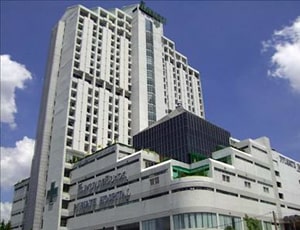
Piyavate Hospital
Bangkok, Thailand
Piyavate Hospital located in Bangkok, Thailand is accredited by JCI. Also listed below are some of the most prominent infrastructural details:
Medicine Centre: Piyavate Hospital provides advanced holistic treatment for their patients. They offer a complete range of services and physicians that specialize in various fields like the endocrine system, the nervous system, kidney function, cardiovascular care, respiratory and digestive system. They pride themselves for the familial care that they provide to their patients.
Fertility and In-Vitro Fertilization Centre: Helping the couples who walk into the Piyavate Hospital to achieve their dream of having a family. They have a medical team that specializes in male and female fertility. They offer consultation services, fertility check-up for both men and women and complete IVF services. They have advanced IVF cycle treatment facilities that offer a high rate of success.
Bone and Joint Institute: Piyavate Hospital houses one of the frontrunners in Orthopaedic health care in all of SouthEast Asia. They offer a wide range of services and surgeries in their bone and joint institute that include hand surgery, hip and knee replacement surgery, spinal cord surgery, upper extremity surgery, arthroscopic surgery and sports medicine.
Eye and Lasik Centre: Piyavate Hospital is fully equipped with the latest and most advanced technology for eye care and houses highly skilled ophthalmologists, sub-specialists and qualified nurses.
Physical Therapy and Rehabilitation Centre: One of the first hospitals to be equipped with the Hybrid Assistive Limb technology that will help a neurologically challenged patient to control the rehabilitation robot limb with a signal from their brain. The Physical Therapy and Rehabilitation Centre at Piyavate Hospital uses this system encourage patients to regain muscle memory to walk and function normally.
Amenities for Patient’s Family:
Piyavate Hospital also offers additional apartment facilities to house the kin of the patients who come to visit them from distant places. A restaurant, a flower shop and a café are a few of the other amenities provided by the hospital.
These are the most popular services offered by the Piyavate Hospital in Bangkok, Thailand. They also provide a plethora of other medical services that are listed below:
Diabetic Foot Centre
Check-up centre
Urology Centre
Heart Institute
Paediatric Centre
Obstetrics and Gynaecology Centre
Surgery Centre
Ear Nose Throat Centre
Haemodialysis Centre
Dental Centre
X-Ray Centre
Gastroenterology Centre
Cancer Centre
Neonatal Intensive Care Unit (NICU)
Emergency Services and Centre
Tele-medicine
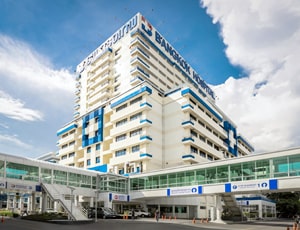
Bangkok Hospital
Bangkok, Thailand
Bangkok Hospital located in Bangkok, Thailand is accredited by JCI. Also listed below are some of the most prominent infrastructural details:
- It is recognised for the application of the newest healthcare technology.
- Blood analysis center that is not just the best in Thailand but in Asia Pacific as well.
- Biomolecule center that is the seed of healthcare equipment for Thailand and overseas.
- International affiliations and collaborations with universities and hospitals in Japan and the United States of America.
- 11 hospitals are recognised as Centers of Excellence.
- Known excellence in Trauma, Orthopedics, Cardiovascular, Neurology as well as Cancer Care.
- There is a proper streamlined patient services process followed in Bangkok Dusit Medical Services, Bangkok, Thailand.
- A well developed research center showcases the intent of the organisation to provide research based treatment opportunities to the patients.
- The group has several Medical industry partnerships as well to ensure healthcare solutions.

Sikarin Hospital
Bangkok, Thailand
Apart from in-detail treatment procedures available, Sikarin Hospital located in Bangkok, Thailand has a wide variety of facilities available for International Patients. Some of the facilities which are provided by them are Airport Transfer, Choice of Meals, Interpreter, SIM, TV inside room. Also listed below are some of the most prominent infrastructural details:
- Sikarin Hospital has a 258-bed capacity.
- The hospital caters to the healthcare needs of both local and international patients.
- Dedicated and skilled, experienced healthcare professionals are the strength of the organization.
It has also received many awards and certifications and some of them are:
- APSIC CSSD Center of Excellence Award (2017-18)
- Accreditation by the Joint Commission International
- HA-Hospital/Healthcare Accreditation
- HACCP Certificate of Registration
- The Best Under a Billion Award
- ISO 14001 Environment Management System
- ISO 9001 Quality Management System
The various clinics and centers of Sikarin Hospital are as follows:
- Pediatric Institute
- Orthopedic Institute
- Dental Center
- Health Check-up Center
- Heart Disease Center
- Cerebral and Nervous System Center
- Internal Medicine Clinic
- Diagnostic Radiology Center
- Diagnostic Laboratory
- Endoscopic Surgery Center
- International Medical Center
- Emergency Medical Center
- Sikarin Beauty Center
- Eye Center
- Rehabilitation Center
- Women’s Health Center
- Ear, Nose and Throat Center
- Specialized Internal Medicine Center
- Center for Gastrointestinal and Liver Diseases
The medical technology present in Sikarin Hospital is outlined here:
- MRI (Magnetic Resonance Imaging) magnetic resonance imaging
- Hybrid Operating Room
- Endoscopic Surgery - Gastrointestinal medical technology with tiny capsules
- S.R. Laboratory
- Cardiac Catheterization Lab
- Dental Operating Microscope, an innovative endoscopic root canal treatment
- 128-Slice CT Scan
- ORTHOPANTOMOGRAPH OP 3D oral X-ray machine
- Digital Mammogram
- Optical Coherence Tomography
- INFRARED (IR) IMAGING Surgical Technology “Cure Cancer” – Direct, Accurate, Fast
- 3D endoscopic surgery technology
- Laparoscopic Surgery
- Dental Aerosol Suction Dental Intraoral Aerosol Remover
- Comprehensive Dental Center
- iTeroElement 5D
Our Services to better your experience
Opinion & Option
We submit the most accurate opinion and options from one or more countries for your review
Consult Privately
Consult with a certified specialist privately on our telemedicine platform even before you decide to travel
Logistics
We handle flights, visas, transfers, and accommodation—so you can focus on your health.
Recovery
Our In-house rehabilitation service packages to better your recovery and treatment outcome
Why Choose Thailand for Astigmatism Treatment?
- Access to Eye-Care Specialists: Patients can explore ophthalmology centres that assess refractive errors and corneal conditions. Confirm the selected ophthalmologist's qualifications and experience with the proposed treatment.
- Diagnostic Facilities: Some specialist centres offer corneal topography, tomography, and other tests needed to assess astigmatism and determine suitability for refractive surgery.
- Individualised Treatment Planning: A comprehensive assessment helps determine whether surgery is appropriate or whether non-surgical vision correction is the safer option.
- International Patient Support: Some hospitals provide appointment coordination, interpreter services, and assistance with travel arrangements. Patients should confirm the available services and follow-up arrangements before travelling.
- Treatment Cost Comparison: Costs vary by procedure, hospital, diagnostic requirements, and individual circumstances. Patients should request an itemised estimate and clarify what is included.
Frequently Asked Questions
Author

Pragun Gupta
Pragun Gupta is a Doctor of Pharmacy (Pharm. D.) professional from Teerthanker Mahaveer University with hands-on experience in clinical pharmacology, clinical research, and evidence-based medical writing. Through her clinical and research exposure, she has developed a strong interest in pharmacoeconomics, pharmacology, therapeutics, and pharmacovigilance.
As a medical writer, she works on medical and scientific research articles, patient education materials, and healthcare-focused content. Her clinical research and evidence-based writing experience enables her to translate complex medical information into clear, accurate, patient-friendly content while maintaining scientific credibility and medical accuracy. Her primary aim is to make healthcare information accessible and easy for patients and general readers to understand.
View MoreReviewer
Dr. Vidit Tripathi
ENT Surgeon
24 Years of Experience
One of the finest ENT Surgeon in New Delhi, India, Dr. Vidit Tripathi, has worked with several world class multidisciplinary hospitals over the years. Dr. Vidit Tripathi has over 24+ years of experience in his field. The specialist treats and manages a wide range of conditions such as Goiter, Radiation Necrosis in Neck, Neck Injury, Perforates Eardrum View More
Last Reviewed - January 2026