Aortic Valve Disease Treatment in Thailand
- Top Accredited Hospitals
- Global Medical Standards
- Cutting-Edge Technology
- Proven Treatment Options
- High Success Rate
- Trusted by Millions

What is Aortic Valve Disease?
Aortic Valve Disease occurs when the aortic valve does not open or close normally. In aortic stenosis, the valve becomes narrowed and restricts blood flow from the left ventricle to the aorta. In aortic regurgitation, the valve does not close completely, allowing blood to flow backwards into the left ventricle. The condition may develop because of age-related calcification, a bicuspid aortic valve, rheumatic heart disease, infection, or other structural abnormalities.
What is the Importance of Timely Treatment?
Timely evaluation helps determine the type and severity of aortic valve disease, assess heart function, control symptoms, and identify when monitoring, medicines, valve repair, or valve replacement may be appropriate. Treating significant disease can help reduce the risk of complications such as heart failure, abnormal heart rhythms, fainting, and other cardiovascular problems.
What are the Common Symptoms of Aortic Valve Disease?
- Shortness of Breath: Breathlessness may develop during physical activity and can become more noticeable as valve disease progresses.
- Chest Discomfort: Aortic stenosis may cause chest pressure, tightness, or discomfort, particularly during exertion.
- Fatigue: Reduced forward blood flow or increased cardiac workload may cause tiredness and reduced stamina.
- Dizziness or Fainting: Reduced blood flow during activity can cause lightheadedness or fainting, particularly in significant aortic stenosis.
- Reduced Exercise Tolerance: Routine physical activities may become increasingly difficult because of breathlessness or fatigue.
- Palpitations: Some people may experience a fast, pounding, or irregular heartbeat, particularly when associated rhythm abnormalities develop.
Causes and Risk Factors of Aortic Valve Disease
Causes
- Age-Related Calcification: Calcium deposits and progressive thickening can stiffen and narrow the aortic valve.
- Bicuspid Aortic Valve: A congenital valve abnormality in which the aortic valve has two leaflets instead of the usual three can lead to stenosis or regurgitation.
- Rheumatic Heart Disease: Rheumatic fever can cause long-term damage and thickening of the aortic valve.
- Infective Endocarditis: Infection of the valve can damage its leaflets and cause regurgitation.
- Congenital Abnormalities: Structural abnormalities present from birth can affect aortic valve function.
- Aortic Root Disease: Enlargement or structural abnormalities of the aorta can prevent the valve from closing properly and cause regurgitation.
- Connective Tissue Disorders: Certain inherited connective tissue conditions can affect the aortic valve or aortic root.
- Previous Cardiac Procedures or Radiation: Some treatments can contribute to later structural valve changes.
Risk Factors
- Older age
- Bicuspid aortic valve
- Previous rheumatic fever or rheumatic heart disease
- High blood pressure
- High cholesterol
- Smoking
- Diabetes
- Chronic kidney disease
- Previous infective endocarditis
- Family history of certain valve or aortic conditions
- Certain congenital or connective tissue disorders
Latest Research and Technologies in the Treatment of Aortic Valve Disease in Thailand
- Thailand's advanced cardiac centres use echocardiography, cardiac CT, and other imaging techniques to assess aortic valve disease and plan treatment. Eligible patients can receive surgical aortic valve replacement (SAVR) or transcatheter aortic valve implantation (TAVI/TAVR). Treatment planning increasingly incorporates detailed valve imaging, minimally invasive techniques, and multidisciplinary Heart Team assessment.
Treatment options for Aortic Valve Disease
Surgical Aortic Valve Replacement (SAVR): The traditional open-heart standard using either a mechanical or bioprosthetic valve, preferred for younger patients, those with low surgical risk, or those requiring multi-valve surgery.
Transcatheter Aortic Valve Replacement (TAVR/TAVI) : A brilliant, minimally invasive option delivered via a catheter (usually transfemoral). It is now a first-line or highly utilised recommendation across all surgical risk tiers for patients with severe aortic stenosis, depending on age and vascular anatomy.
Balloon Aortic Valvuloplasty (BAV): This is properly designated as a temporary, non-definitive bridge therapy. It temporarily widens the valve in hemodynamically unstable adults or as a bridge to definitive SAVR/TAVR.
Bentall procedure : A highly specific, complex cardiac surgery that treats a distinct subset of patients with Aortic Valve Disease. In clinical database structures or decision support tools.
- Clinical assessment:
- Medical History: Assessment includes symptoms, previous rheumatic fever, congenital valve abnormalities, heart disease, infections, previous procedures, and relevant family history.
- Physical Examination: A doctor may listen for an abnormal heart murmur and assess blood pressure, heart rhythm, breathing, and signs of fluid retention.
- Electrocardiogram (ECG): Evaluates heart rhythm and electrical activity and may show changes associated with cardiac strain.
- Exercise or Stress Testing: May help assess functional capacity and symptoms in selected patients who can safely exercise.
- Blood Tests: Selected tests may assess associated conditions, kidney function, blood counts, or other factors relevant to treatment.
- Imaging Tests:
- Transthoracic Echocardiography (TTE): The primary imaging test used to assess aortic valve structure, blood flow, valve narrowing or leakage, and heart function.
- Transesophageal Echocardiography (TEE): Provides detailed images of the valve and surrounding structures and may assist treatment planning.
- 3D Echocardiography: Provides detailed three-dimensional assessment of valve anatomy in selected patients.
- Cardiac CT: Can provide detailed information about valve calcification, aortic anatomy, and suitability for transcatheter valve procedures.
- Cardiac MRI: May assess ventricular function, aortic anatomy, and the effects of significant aortic regurgitation in selected patients.
- Chest X-ray: May show heart enlargement or changes associated with advanced cardiovascular disease.
- Cardiac Catheterisation: May be performed in selected patients for pressure measurements, coronary assessment, or catheter-based treatment.
MediRehab (a chain of Rehab centres, part of MediGence) provides comprehensive tele-rehabilitation services to support patients with aortic valve disease in Thailand. These services include:
- Cardiac Rehabilitation: Selected patients may benefit from structured rehabilitation after valve surgery or transcatheter treatment.
- Gradual Physical Activity: Increase activity according to symptoms, heart function, treatment history, and guidance from the cardiac team.
- Exercise Conditioning: Individualised exercise can help improve strength, endurance, and functional capacity when medically appropriate.
- Medicines are selected according to the type and severity of aortic valve disease and associated conditions. Diuretics may help manage fluid retention in patients with heart failure, while blood-pressure medicines may be used when appropriate, particularly in aortic regurgitation. Medicines may also be prescribed to manage abnormal heart rhythms, coronary artery disease, or other cardiovascular risk factors.
Instantly Connect with our Specialists


Hospitals for Aortic Valve Disease in Thailand

Piyavate Hospital
Bangkok, Thailand
Piyavate Hospital located in Bangkok, Thailand is accredited by JCI. Also listed below are some of the most prominent infrastructural details:
Medicine Centre: Piyavate Hospital provides advanced holistic treatment for their patients. They offer a complete range of services and physicians that specialize in various fields like the endocrine system, the nervous system, kidney function, cardiovascular care, respiratory and digestive system. They pride themselves for the familial care that they provide to their patients.
Fertility and In-Vitro Fertilization Centre: Helping the couples who walk into the Piyavate Hospital to achieve their dream of having a family. They have a medical team that specializes in male and female fertility. They offer consultation services, fertility check-up for both men and women and complete IVF services. They have advanced IVF cycle treatment facilities that offer a high rate of success.
Bone and Joint Institute: Piyavate Hospital houses one of the frontrunners in Orthopaedic health care in all of SouthEast Asia. They offer a wide range of services and surgeries in their bone and joint institute that include hand surgery, hip and knee replacement surgery, spinal cord surgery, upper extremity surgery, arthroscopic surgery and sports medicine.
Eye and Lasik Centre: Piyavate Hospital is fully equipped with the latest and most advanced technology for eye care and houses highly skilled ophthalmologists, sub-specialists and qualified nurses.
Physical Therapy and Rehabilitation Centre: One of the first hospitals to be equipped with the Hybrid Assistive Limb technology that will help a neurologically challenged patient to control the rehabilitation robot limb with a signal from their brain. The Physical Therapy and Rehabilitation Centre at Piyavate Hospital uses this system encourage patients to regain muscle memory to walk and function normally.
Amenities for Patient’s Family:
Piyavate Hospital also offers additional apartment facilities to house the kin of the patients who come to visit them from distant places. A restaurant, a flower shop and a café are a few of the other amenities provided by the hospital.
These are the most popular services offered by the Piyavate Hospital in Bangkok, Thailand. They also provide a plethora of other medical services that are listed below:
Diabetic Foot Centre
Check-up centre
Urology Centre
Heart Institute
Paediatric Centre
Obstetrics and Gynaecology Centre
Surgery Centre
Ear Nose Throat Centre
Haemodialysis Centre
Dental Centre
X-Ray Centre
Gastroenterology Centre
Cancer Centre
Neonatal Intensive Care Unit (NICU)
Emergency Services and Centre
Tele-medicine

Phyathai 2 International Hospital
Bangkok, Thailand
Phyathai 2 International Hospital located in Bangkok, Thailand is accredited by JCI. Also listed below are some of the most prominent infrastructural details:
- Fully equipped rooms are available for convenience of the patients- Gold B Room, Gold A Room, Pediatric Gold A, Platinum room, and Prestige ward
- Nearby accommodations are also available- Abloom Service Apartments, Bangkok Patio, VIB Best Western Sanam Pao, VIC3 Hotel
- Operating room
- International Patient Medical Center to assist overseas patients
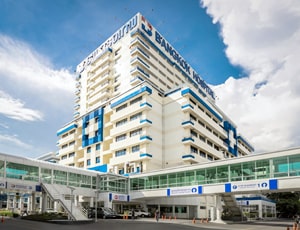
Bangkok Hospital
Bangkok, Thailand
Bangkok Hospital located in Bangkok, Thailand is accredited by JCI. Also listed below are some of the most prominent infrastructural details:
- It is recognised for the application of the newest healthcare technology.
- Blood analysis center that is not just the best in Thailand but in Asia Pacific as well.
- Biomolecule center that is the seed of healthcare equipment for Thailand and overseas.
- International affiliations and collaborations with universities and hospitals in Japan and the United States of America.
- 11 hospitals are recognised as Centers of Excellence.
- Known excellence in Trauma, Orthopedics, Cardiovascular, Neurology as well as Cancer Care.
- There is a proper streamlined patient services process followed in Bangkok Dusit Medical Services, Bangkok, Thailand.
- A well developed research center showcases the intent of the organisation to provide research based treatment opportunities to the patients.
- The group has several Medical industry partnerships as well to ensure healthcare solutions.
Our Services to better your experience
Opinion & Option
We submit the most accurate opinion and options from one or more countries for your review
Consult Privately
Consult with a certified specialist privately on our telemedicine platform even before you decide to travel
Logistics
We handle flights, visas, transfers, and accommodation—so you can focus on your health.
Recovery
Our In-house rehabilitation service packages to better your recovery and treatment outcome
Why Choose Thailand for Aortic Valve Disease Treatment?
- Experienced Cardiac Specialists: Access to cardiologists, interventional cardiologists, cardiac surgeons, and other cardiovascular specialists.
- Advanced Cardiac Care: Hospitals may provide specialised cardiac intensive care and postoperative monitoring.
- Multidisciplinary Heart Teams: Cardiologists, cardiac surgeons, imaging specialists, anaesthesiologists, intensivists, and rehabilitation professionals can coordinate complex valve cases.
- International Patient Support: Many major Thai hospitals provide assistance with medical records, appointments, treatment coordination, accommodation, and follow-up.
Frequently Asked Questions

Reviewer

Dr. Nityanand Tripathi
Interventional Cardiologist
29 Years of Experience
With a rich experience of more than 29 years, Dr. Nityanand has gained a vast spectrum of skills and expertise in performing all types of complex cardiac procedures. He is an expert in clinical & interventional cardiology and electrophysiology. He studied his medicine (MBBS) and MD from the Institute of Medical Sciences of Banaras Hindu University, Varanasi, and later completed his DM in Cardiology from the prestigious King George Medical University, Lucknow. View More
Last Reviewed - January 2026