Anorectal Varicosities Treatment in Thailand
- Top Accredited Hospitals
- Global Medical Standards
- Cutting-Edge Technology
- Proven Treatment Options
- High Success Rate
- Trusted by Millions

What are Anorectal Varicosities?
Anorectal varicosities, also called anorectal or rectal varices, are abnormally enlarged veins in and around the rectum and anus. They usually develop as collateral blood vessels when portal hypertension causes increased pressure in the portal venous system, most commonly in people with advanced liver disease or other conditions affecting portal blood flow.
What is the Importance of Timely Treatment?
Anorectal varices may remain asymptomatic, but they can cause significant or potentially life-threatening rectal bleeding when a varix ruptures. Prompt evaluation is particularly important in patients with portal hypertension who develop unexplained rectal bleeding. Early diagnosis also allows doctors to identify and manage the underlying cause of portal hypertension and reduce the risk of recurrent bleeding.
What are the Common Symptoms of Anorectal Varicosities?
- Rectal bleeding
- Blood in the stool
- Anemia
- Anorectal discomfort
- Symptoms of underlying liver disease
Causes and Risk Factors of Anorectal Varicosities
Causes
- Portal hypertension: Increased pressure in the portal venous system is the principal underlying mechanism.
- Liver cirrhosis: Advanced chronic liver disease can increase portal pressure and promote formation of collateral veins.
- Portal vein thrombosis: Obstruction of portal blood flow can contribute to portal hypertension and collateral vessel formation.
- Non-cirrhotic portal hypertension: Conditions such as extrahepatic portal venous obstruction or other vascular disorders can also cause anorectal varices.
- Other causes of portal hypertension: Any condition that significantly increases portal venous pressure may contribute to development of ectopic varices.
Risk Factors
- Chronic liver disease or cirrhosis
- Portal hypertension
- Portal vein thrombosis or obstruction
- Previous abdominal or pelvic surgery in selected patients
- Conditions causing non-cirrhotic portal hypertension
- Previous episodes of variceal bleeding
Latest Research and Technologies in the Treatment of Anorectal Varicosities in Thailand
- Anorectal variceal management focuses on identifying the bleeding source, assessing portal hypertension, and selecting treatment based on the patient's condition and venous anatomy. Diagnostic approaches may include anoscopy or proctoscopy, flexible sigmoidoscopy, colonoscopy, endoscopic ultrasound (EUS) with Doppler, and contrast-enhanced CT imaging when indicated.
Treatment options for Anorectal Varicosities
Endoscopic treatment: Endoscopic band ligation, sclerotherapy, or other local techniques may control bleeding when anatomically appropriate.
EUS-guided therapy : EUS-guided injection techniques, including selected glue-based approaches, may be considered in specialised centres.
Cost Start From 700Explore Options
Interventional radiology: Embolisation can control bleeding when endoscopic treatment is unsuccessful or unsuitable.
TIPS: In selected patients with significant portal hypertension and recurrent or uncontrolled bleeding, TIPS may decompress the portal venous system.
- Clinical assessment:
- Medical History: The doctor reviews rectal bleeding, previous episodes, liver disease, portal hypertension and any history of abdominal or pelvic procedures.
- Physical Examination: Examination of the abdomen and anorectal region helps assess bleeding and distinguish possible varices from other causes such as hemorrhoids.
- Blood Tests: Complete blood count and coagulation testing can help identify anemia, blood loss and abnormalities that may affect treatment.
- Liver and Portal Hypertension Assessment: Clinically indicated, liver function tests and investigations for the underlying cause of portal hypertension may be performed.
- Endoscopic Ultrasound (EUS): EUS can identify deep rectal varices and assess their venous anatomy and blood flow.
- Colour Doppler Ultrasound: Doppler imaging can evaluate portal and collateral venous blood flow and may help assess portal hypertension.
- MRI/MR Angiography: MRI-based imaging can provide detailed information about pelvic and portal venous anatomy when additional assessment is required.
- Medicines used for anorectal varices generally focus on reducing portal pressure, controlling bleeding, and managing the underlying condition. Treatment may include medicines that improve blood flow or reduce bleeding, along with supportive treatment when required. The specific medicines depend on symptom severity, the underlying cause, and the patient's overall health.
Instantly Connect with our Specialists


Hospitals for Anorectal Varicosities in Thailand
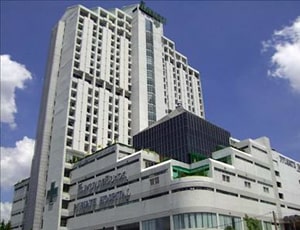
Piyavate Hospital
Bangkok, Thailand
Piyavate Hospital located in Bangkok, Thailand is accredited by JCI. Also listed below are some of the most prominent infrastructural details:
Medicine Centre: Piyavate Hospital provides advanced holistic treatment for their patients. They offer a complete range of services and physicians that specialize in various fields like the endocrine system, the nervous system, kidney function, cardiovascular care, respiratory and digestive system. They pride themselves for the familial care that they provide to their patients.
Fertility and In-Vitro Fertilization Centre: Helping the couples who walk into the Piyavate Hospital to achieve their dream of having a family. They have a medical team that specializes in male and female fertility. They offer consultation services, fertility check-up for both men and women and complete IVF services. They have advanced IVF cycle treatment facilities that offer a high rate of success.
Bone and Joint Institute: Piyavate Hospital houses one of the frontrunners in Orthopaedic health care in all of SouthEast Asia. They offer a wide range of services and surgeries in their bone and joint institute that include hand surgery, hip and knee replacement surgery, spinal cord surgery, upper extremity surgery, arthroscopic surgery and sports medicine.
Eye and Lasik Centre: Piyavate Hospital is fully equipped with the latest and most advanced technology for eye care and houses highly skilled ophthalmologists, sub-specialists and qualified nurses.
Physical Therapy and Rehabilitation Centre: One of the first hospitals to be equipped with the Hybrid Assistive Limb technology that will help a neurologically challenged patient to control the rehabilitation robot limb with a signal from their brain. The Physical Therapy and Rehabilitation Centre at Piyavate Hospital uses this system encourage patients to regain muscle memory to walk and function normally.
Amenities for Patient’s Family:
Piyavate Hospital also offers additional apartment facilities to house the kin of the patients who come to visit them from distant places. A restaurant, a flower shop and a café are a few of the other amenities provided by the hospital.
These are the most popular services offered by the Piyavate Hospital in Bangkok, Thailand. They also provide a plethora of other medical services that are listed below:
Diabetic Foot Centre
Check-up centre
Urology Centre
Heart Institute
Paediatric Centre
Obstetrics and Gynaecology Centre
Surgery Centre
Ear Nose Throat Centre
Haemodialysis Centre
Dental Centre
X-Ray Centre
Gastroenterology Centre
Cancer Centre
Neonatal Intensive Care Unit (NICU)
Emergency Services and Centre
Tele-medicine

Sukumvit Hospital, Bangkok
Bangkok, Thailand
- Sukumvit Hospital has provided a comprehensive range of healthcare services since 1977. It is committed to providing patient-centred care by combining advanced medical technologies and employing highly skilled, multi-specialised physicians to ensure that each patient receives high-quality treatment across all the various areas of medicine offered at the facility. They offer modern diagnostics, minimally invasive surgical procedures, rehabilitation, emergency services, and a full array of international patient services, while maintaining stringent standards for patient safety and personalised healthcare.

Sikarin Hospital
Bangkok, Thailand
Apart from in-detail treatment procedures available, Sikarin Hospital located in Bangkok, Thailand has a wide variety of facilities available for International Patients. Some of the facilities which are provided by them are Airport Transfer, Choice of Meals, Interpreter, SIM, TV inside room. Also listed below are some of the most prominent infrastructural details:
- Sikarin Hospital has a 258-bed capacity.
- The hospital caters to the healthcare needs of both local and international patients.
- Dedicated and skilled, experienced healthcare professionals are the strength of the organization.
It has also received many awards and certifications and some of them are:
- APSIC CSSD Center of Excellence Award (2017-18)
- Accreditation by the Joint Commission International
- HA-Hospital/Healthcare Accreditation
- HACCP Certificate of Registration
- The Best Under a Billion Award
- ISO 14001 Environment Management System
- ISO 9001 Quality Management System
The various clinics and centers of Sikarin Hospital are as follows:
- Pediatric Institute
- Orthopedic Institute
- Dental Center
- Health Check-up Center
- Heart Disease Center
- Cerebral and Nervous System Center
- Internal Medicine Clinic
- Diagnostic Radiology Center
- Diagnostic Laboratory
- Endoscopic Surgery Center
- International Medical Center
- Emergency Medical Center
- Sikarin Beauty Center
- Eye Center
- Rehabilitation Center
- Women’s Health Center
- Ear, Nose and Throat Center
- Specialized Internal Medicine Center
- Center for Gastrointestinal and Liver Diseases
The medical technology present in Sikarin Hospital is outlined here:
- MRI (Magnetic Resonance Imaging) magnetic resonance imaging
- Hybrid Operating Room
- Endoscopic Surgery - Gastrointestinal medical technology with tiny capsules
- S.R. Laboratory
- Cardiac Catheterization Lab
- Dental Operating Microscope, an innovative endoscopic root canal treatment
- 128-Slice CT Scan
- ORTHOPANTOMOGRAPH OP 3D oral X-ray machine
- Digital Mammogram
- Optical Coherence Tomography
- INFRARED (IR) IMAGING Surgical Technology “Cure Cancer” – Direct, Accurate, Fast
- 3D endoscopic surgery technology
- Laparoscopic Surgery
- Dental Aerosol Suction Dental Intraoral Aerosol Remover
- Comprehensive Dental Center
- iTeroElement 5D
Our Services to better your experience
Opinion & Option
We submit the most accurate opinion and options from one or more countries for your review
Consult Privately
Consult with a certified specialist privately on our telemedicine platform even before you decide to travel
Logistics
We handle flights, visas, transfers, and accommodation—so you can focus on your health.
Recovery
Our In-house rehabilitation service packages to better your recovery and treatment outcome
Why Choose Thailand for Anorectal Varicosities Treatment?
- Specialised Gastroenterology Care: Thai hospitals have gastroenterology and hepatology departments experienced in evaluating portal hypertension and gastrointestinal bleeding.
- Advanced Endoscopic Facilities: Specialised centres offer diagnostic and therapeutic endoscopy, including EUS and Doppler-assisted assessment.
- Interventional Radiology Expertise: Selected hospitals offer procedures such as embolisation and TIPS for complex portal-hypertension-related bleeding.
- Multidisciplinary Care: Gastroenterologists, hepatologists, interventional radiologists, and surgeons can manage complex cases collaboratively.
- International Patient Support: Many Thai hospitals provide international-patient services such as medical record review, specialist appointments, treatment coordination and assistance with travel-related arrangements.
